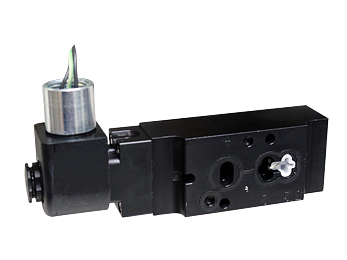




NAMUR Valves - CSA/FM, Standard Temperature Applications -20 to 123 F (-29 to 50 C)
 Operating Instructions
Valve Conversion Instructions
Product Catalog - NAMUR Interface Valves for Hazardous Locations
Operating Instructions
Valve Conversion Instructions
Product Catalog - NAMUR Interface Valves for Hazardous Locations
- Compact Design - Balanced spool construction, compact size, low profile and high performance
- Solenoid Pilot - Pilot uses full air line pressure to shift the valve; Solenoid guaranteed against burnout
- Solenoid Coils -Explosion-Proof CSA / FM and CSA / UL Certified
- Tapered Tee-Seal - Bidirectional tapered Tee-Seal eliminates sticking problems
- Tested Tough - Proven reliable according to SAE specifications: rust & water injected every 864,000 cycles for 20-million cycle
- Manual Override - Allows the solenoid valve to be used manually in case of electrical failure, or for quick cycle testing
- External Pilot Supply - Easily field convertible to external pilot supply
Valves
NAMUR interface valves are designed to easily mount directly to pneumatic valve actuators, and are used as pilot valves to control the actuator in many flow processes. The balanced spool construction allows ports to be plugged for 2 way or 3 way function, or restricted for inexpensive cylinder exhaust speed control. A wide variety of options and operators available.
Tapered Tee-Seal ........ Eats Dirt
Bidirectional tapered Tee-Seal eliminates sticking problems.
- Flexes to clean spool
- Mechanically Locked
- No Spiral Twist
No Extrusion - Air Line Sediment is Wiped Away
- Tested tough and proven reliable according to SAE specifications: Rust and water injected every 864,000 cycles for 20 million cycles.
Solenoid ... Guaranteed Against Burnout
Three-way pilot uses full air line pressure to shift the valve. The pilot is internally supplied when the pressure at port one is 35 to 150 PSIG (240 to 1030 kPa). The coil is hermetically sealed as an integral watertight molded unit. Intrinsically-safe and explosion-proof versions available. Push Non-Locking Override is standard. (Extended Turn and Turn-Locking available).
Unable to load products. Please try again.
loading...
loading...
Product Overview
The Automatic Valve D20 Series NAMUR Valves with CSA/FM Explosion-Proof coils for Standard Temperature Applications provide hazardous area certified directional control valve pilot solutions for pneumatic actuators in classified locations operating from -20 to 123 F (-29 to 50 C). The CSA/FM certified explosion-proof solenoid coil assembly (coil code Y) meets NEC Article 500/501 requirements for Class I, Division 1 and Division 2 hazardous classified areas in North America, combining North American electrical safety compliance with the D20 Series' proven high-cycle NAMUR interface valve performance.
These valves are direct-mount NAMUR interface devices per VDI/VDE 3845, eliminating external tubing runs between the pilot valve and actuator. In classified areas, reducing external tubing connections also reduces the number of fittings that represent potential flammable process leak paths. The D20 Series aluminum bar stock body with Buna-N seals and stainless steel spool delivers 1.8 Cv (1800 Nl/min) in 3/2 and 5/2 functions across the full standard temperature range.
Available in D2003 (1-1/4" body height) and D2013 (1" body height) variants with 1/4" NPT ports, the CSA/FM standard temperature series supports 3/2, 5/2 single solenoid, 5/2 double solenoid, and 5/3 valve functions. The Tapered Tee-Seal self-cleaning design has been SAE validated to 20 million cycles for high-cycle process automation service. Push non-locking manual override is standard for commissioning and maintenance.
For instrumentation engineers, EPC contractors, and procurement teams specifying process valve actuator pilot controls in petroleum refineries, chemical plants, gas processing facilities, and other NEC-classified industrial environments, the CSA/FM Standard Temperature D20 NAMUR series provides a proven combination of North American hazardous area compliance, high flow capacity, standardized NAMUR mounting, and long service life.
Key Engineering Features
- CSA/FM Explosion-Proof Certified Solenoid Coil - Solenoid coil assembly certified by CSA and Factory Mutual (FM) for Class I, Division 1 and Division 2 hazardous classified locations per NEC Article 500/501. The explosion-proof coil housing is rated to contain any internal arc or spark, preventing ignition of surrounding flammable gas or vapor atmospheres in petroleum, chemical, and gas processing facilities.
- 1/2" Conduit Connection with 24" Leads - CSA/FM coil assembly uses 1/2" conduit connection with 24" factory-installed leads, compatible with standard industrial explosion-proof conduit wiring systems as required by NEC Article 501 for Division 1 installations.
- Compact Balanced Spool Design - Balanced spool construction provides compact, low-profile direct-mount installation on pneumatic actuators, simplifying valve skid layout in classified areas where minimizing the number of fittings and potential leak points is an installation priority.
- Solenoid Pilot - Full Line Pressure Shifting - Three-way pilot uses full air line pressure (35-150 psig internal supply) to shift the spool, providing fast and complete actuation without intermediate pilot regulators or external boosters in classified area installations.
- Tapered Tee-Seal Self-Cleaning Design - Bidirectional tapered Tee-Seal eliminates spool sticking by flexing to clean the spool bore on every actuation stroke. Wiping away air line sediment and particulates prevents buildup that leads to sluggish actuation and valve failure in high-cycle process automation service.
- Push Non-Locking Manual Override - Standard push non-locking manual override allows manual valve actuation during electrical power failure or process control commissioning, reducing mean time to repair in classified area installations where rapid manual process control may be required during electrical fault events.
- SAE Tested - 20 Million Cycle Durability - Validated to 20 million cycles per SAE specifications with rust and water contamination injection every 864,000 cycles, confirming suitability for continuous high-cycle process automation service in classified area environments.
- Field Convertible to External Pilot Supply - The pilot supply can be field converted from internal to external to accommodate installations where line pressure does not consistently meet the 35 psig minimum, or where independent pilot supply is required for fail-safe or process safety design purposes.
- NAMUR Interface per VDI/VDE 3845 - Standardized direct-mount interface eliminates external actuator tubing, reducing leak points in classified areas and enabling universal compatibility with any VDI/VDE 3845 compliant pneumatic actuator.
- CSA/UL STD 429 Coil Certification - Solenoid valve coil components are certified to CSA and UL Standard 429 for electrically operated valves, satisfying project specification requirements for North American certified solenoid valve components in hazardous area instrumentation systems.
Technical Specifications
General Specifications
| Parameter | Specification |
| Series | D20 (D2003: 1-1/4" body height; D2013: 1" body height) |
| Valve Functions | 3/2 Normally Closed; 5/2 Single Solenoid (NC); 5/2 Double Solenoid; 5/3 Closed Center; 5/3 Open Center; 5/3 Power Center |
| Port Size | 1/4" |
| Port Thread | NPT |
| Maximum Flow (3/2 and 5/2) | Cv 1.8 (1800 Nl/min) |
| Maximum Flow (5/3) | Cv 1.4 (1400 Nl/min) |
| Operating Pressure (3/2 D20) | 35-150 psig (2.4-10.3 bar) |
| Operating Pressure (5/2) | 35-150 psig (2.4-10.3 bar) |
| Operating Pressure (5/3) | 50-150 psig (3.4-10.3 bar) |
| Actuation | Solenoid Pilot Controlled (CSA/FM Explosion-Proof Coil) |
| Construction | Spool |
| Mounting | Direct Mount; NAMUR Interface per VDI/VDE 3845 |
| Valve Body Material | Bar Stock Aluminum |
| Spool Material | Aluminum |
| Seal Material | Buna-N |
| Coil Connection | 1/2" Conduit with 24" Leads (CSA/FM explosion-proof housing) |
| Coil Certification | CSA/FM Explosion-Proof (Coil Code Y) |
| Voltage | 24 VDC only (CSA/FM explosion-proof coil) |
| Power Consumption | 1.6 W at 24 VDC; Resistance: 275 ohms at 25 C |
| Flow Media | Filtered air (lubricated or non-lubricated) |
| Duty Rating | Continuous Duty |
| Weight (coil assembly) | 0.44 lb (0.20 kg) |
Temperature Ratings
Standard temperature operation from -20 to 123 F (-29 to 50 C) applies to all D20 CSA/FM variants. The CSA/FM explosion-proof coil assembly is rated across this full ambient temperature range.
| Configuration | Ambient Temperature | Media Temperature |
| CSA/FM Explosion-Proof - Standard Temp (Buna-N Seals) | 20 to 123 F (-29 to 50 C) | 20 to 123 F (-29 to 50 C) |
Important: For media temperatures below 40 F (4 C), compressed air must be free of water vapor to prevent ice formation inside the valve. For cold-climate hazardous area installations requiring operation below -20 F, specify the CSA/FM Low Temperature series rated to -40 F.
Electrical Data (Solenoid Pilot Valves)
CSA/FM explosion-proof solenoid coils are available in 24 VDC only. Low power consumption (1.6 W) minimizes heat buildup inside the sealed explosion-proof housing and extends coil service life. Coil resistance is 275 ohms at 25 C.
| Voltage | Power Consumption |
| 24 VDC | 1.6 W |
| 24 VDC - Inrush Current | 0.05 A |
| 24 VDC - Holding Current | 0.05 A |
| 24 VDC - Coil Resistance at 25 C | 275 ohms |
Electrical Connection Options
| Connection Type | Coil Code |
| CSA/FM Explosion-Proof 1/2" Conduit with 24" Leads | Y (suffix on model number) |
Flow Performance Data
Flow performance data for D20 Series CSA/FM standard-temperature NAMUR valves.
| Body | Port Size | Function | Cv | Flow (Nl/min) | Weight lb (kg) |
| D2003 | 1/4" | 3/2 or 5/2 Single | 1.8 | 1800 | 0.70 (0.32) |
| D2003 | 1/4" | 5/2 Double Solenoid | 1.8 | 1770 | 0.75 (0.34) |
| D2003 | 1/4" | 5/3 | 1.4 | 1400 | 0.80 (0.36) |
| D2013 | 1/4" | 3/2 or 5/2 Single | 1.8 | 1800 | 0.70 (0.32) |
| D2013 | 1/4" | 5/2 Double Solenoid | 1.8 | 1770 | 0.75 (0.34) |
| D2013 | 1/4" | 5/3 | 1.4 | 1400 | 0.80 (0.36) |
Certifications & Compliance
| Certification/Standard | Detail |
| CSA Explosion-Proof (C22.2) | CSA certified explosion-proof for North American Class I, Division 1 and Division 2 hazardous classified locations per NEC Article 500/501 and CEC Section 18. Covers flammable gas and vapor atmospheres in petroleum, chemical, and gas processing facilities. |
| Factory Mutual (FM) Approved | Factory Mutual approved explosion-proof solenoid coil assembly for Class I, Division 1 hazardous locations. FM approval is required by many insurance underwriters and engineering specifications for process plant instrumentation in classified areas. |
| CSA/UL STD 429 | Solenoid valve coil assembly certified to CSA and UL Standard 429 for electrically operated valve components in North American industrial installations. |
| CE Marking | CE marked for compliance with applicable EU directives for installations requiring CE conformity. |
| NAMUR Interface Standard | Compliant with VDI/VDE 3845 NAMUR interface standard for universal direct-mount compatibility with pneumatic actuators from any compliant manufacturer. |
| SAE Durability Testing | Validated to 20 million cycles per SAE specifications with rust and water contamination injection every 864,000 cycles. |
| SIL Capability | SIL 3 rated for applicable configurations per certification documentation, enabling integration into safety instrumented systems requiring both hazardous area electrical certification and functional safety ratings. |
Typical Applications & Industries
Petroleum Refining
- Automated process valve actuator pilot control throughout refinery distillation units, fluid catalytic cracking (FCC) units, hydrotreaters, and reformers where flammable hydrocarbon vapor atmospheres create Class I, Division 1 area classifications.
- Tank farm and loading rack valve automation in classified areas where petroleum storage and handling creates continuous flammable vapor risk.
- Refinery utility system valve control including fuel gas distribution, steam condensate return, and cooling water makeup systems in classified process areas.
- Crude oil desalting and atmospheric distillation unit valve automation where combined liquid hydrocarbon and vapor conditions require Division 1 rated pilot valves.
Natural Gas Processing and Midstream
- Gas processing plant slug catcher, inlet separator, dehydration unit, and NGL fractionator valve automation in classified areas requiring CSA/FM explosion-proof pilot valves.
- Pipeline compressor station recycle, anti-surge, and block valve actuator control in Class I, Division 1 classified areas at standard temperate-climate installations.
- Gas metering station and custody transfer valve automation in classified areas where accurate, reliable directional control of pneumatic actuators is required for financial and regulatory compliance.
- LNG regasification terminal vaporizer control valve and sendout valve automation in classified process areas at temperate-climate coastal facilities.
Chemical and Petrochemical Manufacturing
- Reactor vessel charge, discharge, and emergency shutoff valve automation in classified areas throughout chemical and petrochemical manufacturing plants where flammable raw materials, intermediates, and products are handled.
- Distillation and separation column valve control in classified areas of olefin cracking, aromatics, and specialty chemical plants where continuous flammable vapor atmosphere conditions apply.
- Solvent handling and recovery system valve automation in classified areas of pharmaceutical, paint, adhesive, and specialty chemical manufacturing facilities.
- Ethylene oxide and other high-hazard chemical process valve automation in Division 1 classified areas where CSA/FM explosion-proof pilot valve certification is a non-negotiable specification requirement.
Offshore Oil and Gas Production
- Offshore platform topsides process valve automation at facilities in the Gulf of Mexico, North Sea, and tropical offshore regions where standard temperature ambient conditions apply and classified area electrical requirements are enforced throughout process areas.
- Wellhead and subsea production tree valve control systems at temperate-climate offshore locations using topside-mounted CSA/FM certified pilot valve assemblies.
- Process safety system emergency shutoff valve (ESD) actuator pilot control in Division 1 classified areas of offshore production facilities.
- Offshore flare and relief system valve automation in classified areas where ignition sources must be eliminated from proximity to flare tip and knockout drum equipment.
Mining, Mineral Processing, and Tunneling
- Underground coal mine pneumatic valve control in areas classified for explosive methane atmospheres where CSA/FM explosion-proof pilot valves are required by mine safety regulations.
- Mineral processing and concentrate handling valve automation in areas with combustible dust atmospheres that may carry Class II Division 1 classification requirements.
- Tunneling and underground construction pneumatic actuator control in areas with potential for flammable gas encounter, requiring explosion-proof instrumentation.
Food, Beverage, and Agricultural Processing - Combustible Dust
- Grain elevator, flour milling, and grain processing valve automation in areas classified for combustible grain dust atmospheres under NEC Article 502 (Class II dust hazards).
- Sugar refinery, starch plant, and dry food ingredient processing valve control in classified areas where combustible organic dust creates Division 1 or Division 2 hazardous area conditions.
- Agricultural storage and handling facility valve automation where stored grain, feed, and organic materials create Class II combustible dust classification requirements.
Ordering and Model Number Configuration
The CSA/FM explosion-proof D20 Series NAMUR valve is ordered using the standard D20 model number with the Y coil certification suffix. CSA/FM coils are available in 24 VDC only. Sample model numbers include D2003AAWR-DBY and D2013GAWR-DBY.
|
Model Number Structure: D20 - 03 - AAWR - DB - Y
D20 Series (D20 NAMUR Interface Valve)
03/13 Body Height (03 = 1-1/4" height; 13 = 1" height)
AA/GA Valve Function / Actuation Code AA = 5/2 Single Solenoid Right AC = 5/2 Single Solenoid Left BW = 5/2 Double Solenoid GA = 3/2 Single Solenoid Right GC = 3/2 Single Solenoid Left CB = 5/3 Double Solenoid
WR Actuation Type Code WR = Weather-Proof Solenoid Base (CSA/FM coil separately certified)
DB Voltage Code DB = DC 24V (only voltage available for CSA/FM explosion-proof coil)
Y Coil Certification Suffix Y = CSA/FM Explosion-Proof, 1/2" Conduit, 24" Leads |
The Y coil suffix designates the CSA/FM explosion-proof coil assembly with 1/2" conduit and 24" factory-installed leads.
CSA/FM explosion-proof coils are available in 24 VDC only. Power consumption is 1.6 W.
Standard temperature range is -20 to 123 F with Buna-N seals. For cold-climate applications below -20 F, specify the CSA/FM Low Temperature series (series 2991) rated to -40 F.
Body height: 03 = D2003 (1-1/4" body); 13 = D2013 (1" body). Both use 1/4" NPT ports.
Conduit wiring and installation must comply with NEC Article 501 for Class I, Division 1 locations, including approved explosion-proof conduit fittings and sealing fittings.
Contact Automatic Valve at (248) 474-6761 for stainless steel body options, G (BSPP) port threads, external pilot supply configuration, transition plate options, and custom hazardous area application engineering.
Accessories
CSA/FM Explosion-Proof Solenoid Coil Assembly
Replacement CSA/FM explosion-proof solenoid coil assemblies (model 7019-9**Y) are available for field coil replacement without replacing the valve body. Coil assembly includes 1/2" conduit connection with 24" factory-installed leads and carries CSA/FM explosion-proof certification. Specify 24 VDC when ordering.
| Coil Model | Type | Certification | Voltage | Weight lb (kg) |
| 7019-9**Y | CSA/FM Explosion-Proof, 1/2" Conduit | CSA/FM | 24 VDC | 0.44 (0.20) |
Warning: Use only CSA/FM certified coil assemblies in classified area installations. Non-certified coils violate NEC Article 501 and create an ignition hazard in flammable atmosphere locations.
Valve Conversion Kits
Valve conversion kits allow field reconfiguration between 4-way and 3-way functions, solenoid relocation, and internal to external pilot supply conversion. Refer to Automatic Valve's Valve Conversion Instructions. In classified areas, coordinate with facility electrical safety authority before implementing field modifications to instrumentation systems.
Transition Plates
Transition plates adapt the D2003 or D2013 NAMUR interface to specific actuator mounting configurations. Confirm actuator interface compatibility with Automatic Valve before ordering.
Related Products & Accessories
- NAMUR Valves - CSA/FM Low Temperature - D20 Series NAMUR valves with CSA/FM explosion-proof coils for hazardous area service down to -40 F. https://www.automaticvalve.com/series/2991-namur-valves-csafm-low-temperature-applications
- NAMUR Valves - ATEX Standard Temperature - D20 Series NAMUR valves with ATEX explosion-proof coils for European hazardous area installations, -20 to 123 F. https://www.automaticvalve.com/series/2988-namur-valves-atex-standard-temperature-applications
- NAMUR Valves - Intrinsically Safe Standard Temperature - D20 Series NAMUR valves with intrinsically safe coils for Division 1/Zone 0 hazardous areas at standard temperatures. https://www.automaticvalve.com/series/2992-namur-valves-intrinsically-safe-standard-temperature-applications
- NAMUR Valves - Standard Temperature (General Automation) - D20 Series NAMUR valves with standard weather-proof coils for non-classified area service, -20 to 123 F. https://www.automaticvalve.com/series/2986-namur-valves-standard-temperature-applications
- NAMUR Valves - High Temperature Applications - D20 Series NAMUR valves with high-temp conduit coil for 0 to 180 F ambient service. https://www.automaticvalve.com/series/3008-namur-valves-high-temperature-applications
- NAMUR Valves - Low Temperature (General Automation) - D20 Series NAMUR valves for non-classified area low-temperature service down to -40 F. https://www.automaticvalve.com/series/2987-namur-valves-low-temperature-applications
Frequently Asked Questions (FAQ)
Q: What is the difference between CSA/FM explosion-proof and intrinsically safe protection methods?
A: Explosion-proof (CSA/FM certified) contains any internal arc or ignition within the certified housing, preventing it from igniting the surrounding flammable atmosphere. Intrinsically safe (IS) prevents ignition by limiting the electrical energy in the circuit to levels too low to ignite a flammable atmosphere, even under fault conditions. Explosion-proof is typically used with higher-power solenoids (>1.6 W); IS is used for very low power circuits. The choice depends on the solenoid power requirement, hazardous area classification, and facility philosophy.
Q: Can this valve be used in Division 1 and Division 2 areas?
A: Yes. CSA/FM explosion-proof certified equipment is approved for use in both Class I, Division 1 (hazardous conditions present during normal operation) and Class I, Division 2 (hazardous conditions present only during abnormal operation) locations. Division 2 may also accept non-incendive or increased safety protection methods, but CSA/FM explosion-proof is accepted in both.
Q: What NEC articles apply to the installation of this valve?
A: For Class I flammable gas/vapor atmospheres, NEC Article 500 defines the classification system and NEC Article 501 specifies wiring methods and equipment requirements for Class I, Division 1 and Division 2 locations. All conduit, junction boxes, fittings, and wiring methods must comply with NEC Article 501 requirements, including the use of explosion-proof conduit fittings and sealing fittings as specified.
Q: Why is the CSA/FM coil limited to 24 VDC only?
A: The CSA/FM explosion-proof coil is designed for 24 VDC at 1.6 W to minimize heat generation inside the sealed explosion-proof housing. Higher voltages or AC operation would require different housing designs to manage heat dissipation in the sealed enclosure. The 24 VDC, 1.6 W specification is optimized for the thermal constraints of the explosion-proof coil design.
Q: How does the flow capacity of the CSA/FM series compare to the standard weather-proof series?
A: The flow capacity is identical. Both the CSA/FM and standard weather-proof series deliver 1.8 Cv (1800 Nl/min) for 3/2 and 5/2 functions, and 1.4 Cv (1400 Nl/min) for 5/3 functions. The D20 valve body and spool assembly are the same; only the solenoid coil certification differs between the series.
Q: Is Factory Mutual (FM) certification required in addition to CSA?
A: Requirement for FM certification varies by project, facility, and insurance specification. Many oil and gas companies and EPC contractors specify FM approval for process plant instrumentation as a condition of insurance coverage or company engineering standards. Projects that require only CSA certification can specify the CSA-only listing; projects requiring FM must specify FM-approved products.
Q: What conduit sealing requirements apply to CSA/FM explosion-proof installations?
A: NEC Article 501.15 requires conduit sealing fittings to be installed within 18" of the explosion-proof enclosure (coil housing) and at all points where conduit enters an explosion-proof enclosure. Sealing fittings must be approved for Class I service, filled with a listed sealing compound, and installed with drain/vent plugs per NEC requirements.
Q: Can this valve be used for emergency shutoff valve (ESD) applications in classified areas?
A: Yes. The D20 CSA/FM NAMUR valve can serve as the pilot valve for ESD-rated pneumatic actuators in classified areas. For applications requiring SIL-rated functional safety, verify that the overall safety instrumented function (SIF) design achieves the required Safety Integrity Level (SIL) by calculating the probability of failure on demand (PFD) for the complete loop, including valve, actuator, and logic solver. The D20 Series has SIL 3 capability per available certification documentation.
Q: What is the maximum operating pressure for the CSA/FM standard temperature series?
A: Maximum operating pressure is 150 psig (10.3 bar) for all functions. Minimum pilot supply pressure is 35 psig for 3/2 and 5/2 functions on internal pilot, and 50 psig for 5/3 functions.
Q: Is manual override permitted in a classified area?
A: The push non-locking manual override is a mechanical device that produces no electrical arc or spark. Its use does not compromise the explosion-proof integrity of the solenoid coil housing. Manual override operation in classified areas should follow facility hot work permit and hazardous area entry procedures. Always verify the process state before manually overriding an actuator control valve.
Q: What happens if I install a standard (non-CSA/FM) coil in a classified area?
A: Installing a non-certified coil in a CSA/FM-required classified area violates NEC Article 501, voids the explosion-proof classification for the installation, and creates an uncontrolled ignition source in the presence of a flammable atmosphere. This represents a serious safety hazard and a regulatory compliance violation. Always use only certified replacement coils in classified area installations.
Q: Can I use this valve with an intrinsically safe barrier for Zone 0 applications?
A: No. The CSA/FM explosion-proof series uses a 1.6 W, 24 VDC coil that is not designed for use behind an intrinsically safe barrier. For Zone 0 or Division 1 applications requiring intrinsic safety protection, specify the D20 Intrinsically Safe series with the IS solenoid coil rated for SIL 2/3 capability.
Installation & Maintenance Guidelines
- All wiring, conduit, and electrical installation in classified areas must comply with NEC Article 501 before energizing any solenoid coil. Obtain all required hot work and classified area entry permits per facility procedures.
- Install conduit sealing fittings within 18" of the CSA/FM explosion-proof coil housing and at all conduit entry points per NEC Article 501.15.
- Use only explosion-proof rated conduit fittings, junction boxes, and connectors throughout the conduit system serving CSA/FM classified area installations.
- Mount the valve directly to the pneumatic actuator NAMUR interface per VDI/VDE 3845. Inspect interface O-rings before assembly. Damaged O-rings create process leak paths in classified areas.
- Verify pilot supply pressure at port 1 is within 35 to 150 psig for 3/2 and 5/2 functions, or 50 to 150 psig for 5/3 functions, under all normal and emergency operating conditions.
- Filter supply air to 40 microns or finer. The Tapered Tee-Seal self-cleans the spool on each cycle, but coarser particulates accelerate wear and reduce service life.
- Do not modify the CSA/FM explosion-proof coil housing, coil leads, or conduit entry fittings. Any modification voids the CSA/FM certification and creates an ignition hazard.
- Test manual override function at commissioning to verify full spool actuation and actuator response before placing the valve into service.
- Perform periodic visual inspection of the coil housing and conduit connections per facility preventive maintenance schedule. Check for physical damage, corrosion, and conduit loosening.
- When replacing coils, use only CSA/FM certified 24 VDC replacement coil assemblies. Substitution with non-certified coils is a safety and regulatory compliance violation.
Warranty & Global Support
Automatic Valve provides a standard warranty on all D20 Series NAMUR valve products covering defects in material and workmanship from the date of purchase. Contact Automatic Valve for specific warranty terms.
Technical support and product configuration assistance is available by phone at (248) 474-6761 or through the Automatic Valve website at automaticvalve.com.
Automatic Valve is a global family member of ROSS Controls, with technical resources and distribution support available throughout the United States, Canada, and internationally for hazardous area classified applications.
For complete technical data, dimensional drawings, operating instructions, valve conversion instructions, and the NAMUR Interface Valves for Hazardous Locations catalog, visit automaticvalve.com or contact the Automatic Valve team directly.
Product Catalog - NAMUR Hazardous Location Valves: https://www.automaticvalve.com/documents/5555/Hazardous_Locations_NAMUR_Interface_Valves_AV-NAMUR_en.pdf
Service Instructions - NAMUR Interface Solenoid Valves: https://www.automaticvalve.com/documents/408/NAMUR_Interface_Solenoid_Valves_Service_Form__AV-NAMUR-OI.pdf
Download Documents
NAMUR Valves - CSA/FM, Standard Temperature Applications