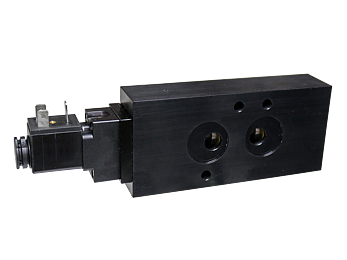




NAMUR Valves - Low Temperature Applications -40 to 123 F (-40 to 50 C)
 Operating Instructions
Product Catalog - NAMUR Interface Valves
Valve Conversion Instructions
Operating Instructions
Product Catalog - NAMUR Interface Valves
Valve Conversion Instructions
- Compact Design - Balanced spool construction, compact size, low profile and high performance
- Solenoid Pilot - Pilot uses full air line pressure to shift the valve; Solenoid guaranteed against burnout
- Weather-Proof Coil - Hermetically sealed as an integral water tight molded unit; robust enclosures to function in rugged environments
- Tapered Tee-Seal - Bidirectional tapered Tee-Seal eliminates sticking problems
- Tested Tough - Proven reliable according to SAE specifications: rust & water injected every 864,000 cycles for 20-million cycle
- Manual Override - Allows the solenoid valve to be used manually in case of electrical failure, or for quick cycle testing
- External Pilot Supply - Easily field convertible to external pilot supply
Valves
NAMUR interface valves are designed to easily mount directly to pneumatic valve actuators, and are used as pilot valves to control the actuator in many flow processes. The balanced spool construction allows ports to be plugged for 2 way or 3 way function, or restricted for inexpensive cylinder exhaust speed control. A wide variety of options and operators available.
Tapered Tee-Seal ........ Eats Dirt
Bidirectional tapered Tee-Seal eliminates sticking problems.
- Flexes to clean spool
- Mechanically Locked
- No Spiral Twist
No Extrusion - Air Line Sediment is Wiped Away
- Tested tough and proven reliable according to SAE specifications: Rust and water injected every 864,000 cycles for 20 million cycles.
Solenoid ... Guaranteed Against Burnout
Three-way pilot uses full air line pressure to shift the valve. The pilot is internally supplied when the pressure at port one is 35 to 150 PSIG (240 to 1030 kPa). The coil is hermetically sealed as an integral watertight molded unit. Intrinsically-safe and explosion-proof versions available. Push Non-Locking Override is standard. (Extended Turn and Turn-Locking available).
Unable to load products. Please try again.
loading...
loading...
Product Overview
The Automatic Valve D20 Series NAMUR Valves for Low Temperature Applications are solenoid pilot directional control valves rated for operation from -40 to 123 F (-40 to 50 C), engineered for direct mounting to pneumatic valve actuators in cold-service process environments. These valves comply with the NAMUR interface standard (VDI/VDE 3845), eliminating external tubing between the pilot valve and actuator to reduce dead volume, minimize leak points, and improve actuator response speed.
The low-temperature rating is achieved through Buna-N seal material, which retains elasticity and sealing integrity at temperatures as low as -40 F (-40 C), where many alternative seal materials become brittle and fail. The valve body uses bar stock aluminum construction, and the solenoid coil is hermetically sealed as an integral watertight molded unit with NEMA 4X/IP65 protection for outdoor and cold-storage environments.
Available in D2003 (1-1/4" body height) and D2013 (1" body height) variants, the low-temperature series supports 3/2, 5/2, and 5/3 valve functions with 1/4" NPT port size and a maximum flow of 1.8 Cv (1800 Nl/min) for 3/2 and 5/2 functions. The balanced spool construction allows port plugging for 2-way or 3-way reconfiguration in the field.
Design engineers specifying actuator pilot valves for LNG terminals, cold storage automation, arctic pipeline control, and cryogenic process systems rely on the D20 Series low-temperature NAMUR valve to maintain reliable directional control performance across the full cold-service temperature range without compromise to cycle life, response speed, or enclosure integrity.
Key Engineering Features
- Low Temperature Rating to -40 F (-40 C) - Rated for ambient and media temperatures as low as -40 F (-40 C), covering arctic outdoor installations, cold storage facilities, LNG terminals, and cryogenic process environments where standard valves suffer seal embrittlement and sticking.
- Buna-N Seals for Cold Service - Buna-N (nitrile) seal material retains elasticity and sealing integrity at low temperatures, preventing the seal stiffening and bypass leakage that occurs when other elastomers approach their glass transition temperatures below freezing.
- Tapered Tee-Seal Self-Cleaning Design - Bidirectional tapered Tee-Seal flexes to clean the spool on every actuation stroke, preventing contaminant accumulation and spool sticking in cold environments where condensate and ice formation in compressed air can accelerate wear.
- Compact Balanced Spool Construction - Balanced spool design delivers compact size, low profile, and high flow performance in a direct-mount package that minimizes exposed external connections subject to cold temperature degradation.
- Solenoid Pilot - Full Line Pressure Shifting - Three-way pilot uses full air line pressure (35-150 psig internal supply) to shift the spool, providing decisive actuation force even at low temperatures where system pressure may vary.
- Weather-Proof Hermetically Sealed Coil - Solenoid coil is hermetically sealed as a watertight molded unit, protecting against moisture ingress, ice formation on electrical connections, and condensation in cold outdoor environments.
- Push Non-Locking Manual Override - Standard push non-locking manual override allows manual valve actuation during electrical failure, critical in cold-service applications where electrical faults may require manual isolation or control of process flows.
- Field Convertible to External Pilot Supply - Pilot supply can be field converted from internal to external when inlet pressure does not meet the 35 psig minimum requirement for internal pilot operation, or when independent pilot supply is required for application flexibility.
- SAE Tested - 20 Million Cycle Durability - Validated per SAE specifications with rust and water injected every 864,000 cycles for 20 million total cycles, confirming suitability for high-cycle cold-service automation without premature seal or spool wear.
- NAMUR Interface per VDI/VDE 3845 - Standardized direct-mount interface eliminates external tubing runs between pilot valve and actuator, reducing the number of fittings and connections exposed to cold-environment thermal contraction and potential leak development.
Technical Specifications
General Specifications
| Parameter | Specification |
| Series | D20 (D2003: 1-1/4" body height; D2013: 1" body height) |
| Valve Functions | 3/2 Normally Closed; 5/2 Single Solenoid (NC); 5/2 Double Solenoid; 5/3 Closed Center; 5/3 Open Center; 5/3 Power Center |
| Port Size | 1/4" |
| Port Thread | NPT |
| Maximum Flow (3/2 and 5/2) | Cv 1.8 (1800 Nl/min) |
| Maximum Flow (5/3) | Cv 1.4 (1400 Nl/min) |
| Operating Pressure (3/2 D20) | 35-150 psig (2.4-10.3 bar) |
| Operating Pressure (5/2) | 35-150 psig (2.4-10.3 bar) |
| Operating Pressure (5/3) | 50-150 psig (3.4-10.3 bar) |
| External Pilot Supply (3/2 and 5/2) | 35-150 psig (2.4-10.3 bar) |
| External Pilot Supply (5/3) | 50-150 psig (3.4-10.3 bar) |
| Actuation | Solenoid Pilot Controlled |
| Construction | Spool |
| Mounting | Direct Mount; NAMUR Interface per VDI/VDE 3845 |
| Valve Body Material | Bar Stock Aluminum |
| Spool Material | Stainless Steel |
| Seal Material | Buna-N |
| Flow Media | Filtered air (lubricated or non-lubricated) |
| Duty Rating | Continuous Duty |
| Enclosure Rating | NEMA 4X, IP65 |
| Weight (D2003 single solenoid) | 0.70 lb (0.32 kg) |
| Manual Override | Push Non-Locking (standard); Push Turn-Locking and Extended Turn-Locking available |
Temperature Ratings
Low temperature rating is achieved through Buna-N seal material selection. Compressed air supplied to valves operating below 40 F (4 C) must be free of water vapor to prevent ice formation in the valve internals.
| Configuration | Ambient Temperature | Media Temperature |
| All D20 Low Temp Variants (Buna-N Seals) | 40 to 123 F (-40 to 50 C) | 40 to 123 F (-40 to 50 C) |
Important: For media temperatures below 40 F (4 C), compressed air must be completely free of water vapor. Ice formation inside the valve can prevent spool actuation and cause valve failure. Ensure upstream air dryers are rated for the minimum dew point of the installation.
Electrical Data (Solenoid Pilot Valves)
All solenoid coils are rated for continuous duty. The hermetically sealed coil construction protects against moisture ingress in cold, humid environments.
| Voltage | Power Consumption |
| 24 VDC | 4.8 W |
| 12 VDC | 5.9 W |
| 110-120 VAC, 50/60 Hz | 6.9 VA |
| 200-240 VAC, 50/60 Hz | 6.4 VA |
| 22-24 VAC, 50/60 Hz | 6.9 VA |
Electrical Connection Options
| Connection Type | Coil Code |
| DIN EN 43650 Form B (standard weather-proof) | blank (default) |
| 1/2" Conduit with 30" Leads | C |
| Molded 18" Leads | G |
| Dustproof Coil | D |
Flow Performance Data
Flow performance data for D20 Series NAMUR valves. Low temperature rating applies to all variants through Buna-N seal selection.
| Body | Port Size | Function | Cv | Flow (Nl/min) | Weight lb (kg) |
| D2003 | 1/4" | 3/2 or 5/2 Single | 1.8 | 1800 | 0.70 (0.32) |
| D2003 | 1/4" | 5/2 Double Solenoid | 1.8 | 1770 | 0.75 (0.34) |
| D2003 | 1/4" | 5/3 | 1.4 | 1381 | 0.80 (0.36) |
| D2013 | 1/4" | 3/2 or 5/2 Single | 1.8 | 1800 | 0.70 (0.32) |
| D2013 | 1/4" | 5/2 Double Solenoid | 1.8 | 1770 | 0.75 (0.34) |
| D2013 | 1/4" | 5/3 | 1.4 | 1400 | 0.80 (0.36) |
Certifications & Compliance
| Certification/Standard | Detail |
| NAMUR Interface Standard | Compliant with VDI/VDE 3845, ensuring dimensional compatibility with pneumatic actuators from any compliant manufacturer. |
| CSA (C22.2 / UL STD 429) | Solenoid coil certified to CSA and UL electrical safety standards for North American industrial installations. |
| Factory Mutual (FM) | Factory Mutual approved for applicable configurations, meeting industrial insurance and safety requirements. |
| CE Marking | CE marked for compliance with applicable EU directives including EMC and Low Voltage Directive requirements. |
| Enclosure Protection | NEMA 4X and IP65, providing dust-tight protection and resistance to water ingress for outdoor cold-environment installations. |
| SAE Durability Testing | Validated per SAE specifications: rust and water injected every 864,000 cycles for 20 million total cycles. |
| SIL Capability | SIL 3 rated for applicable configurations, supporting use in safety instrumented system architectures. |
Typical Applications & Industries
LNG Terminals and Natural Gas Processing
- Automated control of isolation valves, pressure relief bypass valves, and cryogenic liquid transfer valves at LNG import/export terminals where ambient temperatures can reach -40 F during winter Arctic operating conditions.
- Natural gas pipeline pig launcher and receiver valve control in northern latitudes where outdoor installations experience extreme winter cold and pneumatic actuator reliability is safety-critical.
- Boil-off gas handling and vapor recovery system valve automation at LNG storage facilities, where cryogenic liquid proximity creates extreme temperature gradients around installed equipment.
- Cryogenic liquid pump discharge valve control and LNG truck loading arm valve automation requiring pilot valves that reliably function at sustained low-temperature ambient and media conditions.
Cold Storage, Refrigeration, and Frozen Food Processing
- Blast freezer and spiral freezer pneumatic actuator control for product conveying, freezer door operation, and refrigerant circuit valve automation in facilities operating continuously at -40 F.
- Cold storage warehouse automated dock leveler, freezer door, and product sorting conveyor pneumatic control in environments where components must survive continuous low-temperature exposure.
- Refrigerated distribution center and cross-dock facility automated valve and actuator control for ammonia refrigeration system isolation and control in cold room environments.
- Ice cream and frozen food manufacturing line pneumatic control, including portioning equipment, packaging conveyors, and carton filling systems operating in freezing environments.
Arctic and Cold-Climate Pipeline Operations
- Onshore pipeline isolation, pressure regulation, and pig launch/receive valve actuator control at stations in subarctic and arctic regions where winter ambient temperatures regularly fall below -40 F.
- Oil sands facility diluent and bitumen transfer valve automation in northern Alberta and similar cold-climate operations where outdoor equipment must function through severe winter conditions.
- Compressor station and metering station valve control for gas gathering and transmission pipelines in cold-climate regions requiring dependable pilot valve performance without heater boxes.
Chemical and Petrochemical Cold Service
- Ethylene, propylene, and other light hydrocarbon cold-service column and refrigeration system valve control where process and ambient temperatures fall below standard valve operating ranges.
- Air separation plant valve automation for liquid oxygen, liquid nitrogen, and liquid argon product handling valves operating in cryogenic process areas.
- Deepwater floating production storage and offloading (FPSO) vessel valve control in high-latitude deployments with extreme sea and wind chill conditions.
- Polypropylene and polyethylene reactor cooling circuit valve automation in cold-service process areas requiring reliable pilot valve actuation at low ambient temperatures.
Outdoor and Remote Industrial Installations
- Mining and mineral processing operations in Canada, Alaska, Siberia, and Scandinavia where outdoor valve control equipment must perform through extreme winter cold without electrical heating assistance.
- Wind farm and solar energy facility pneumatic actuator control systems in cold-climate regions, including yaw brakes, pitch actuators, and utility connection valve automation.
- Remote sensing and communication tower climate control systems requiring pneumatic actuator reliability at temperatures down to -40 F in unmanned installations.
Transportation and Cold Chain Infrastructure
- Refrigerated rail car and intermodal container refrigeration valve control, where pilot valves must function throughout multi-day transit through cold climates.
- Cold chain pharmaceutical and biologic transport vehicle climate control valve automation requiring consistent performance across a wide temperature range from -40 F to ambient.
- Port and terminal reefer container yard pneumatic valve control systems operating in coastal cold-climate environments with high humidity and potential frost formation.
Ordering and Model Number Configuration
The Automatic Valve D20 Series NAMUR valve uses a structured model number system. The low temperature configuration uses standard Buna-N seals suitable for -40 F operation. Select the appropriate function, body size, voltage, and coil option. Sample model numbers from this series include D2003AAWR-DB and D2013AAWR-DB.
|
Model Number Structure: D20 - 03 - AAWR - DB
D20 Series (D20 NAMUR Interface Valve)
03/13 Body Height (03 = 1-1/4" height; 13 = 1" height)
AA/GA Valve Function Code AA = 5/2 Single Solenoid Right AC = 5/2 Single Solenoid Left BW = 5/2 Double Solenoid GA = 3/2 Single Solenoid Right GC = 3/2 Single Solenoid Left CB = 5/3 Double Solenoid (Closed/Open/Power Center)
WR Actuation Code WR = Weather-Proof Solenoid
DA/DB/ Voltage Code AA/AB DA = DC 12V DB = DC 24V AA = AC 120V 50/60Hz AB = AC 240V 50/60Hz
(opt) Coil Option Suffix (blank) = DIN Form B standard coil C = 1/2" Conduit 30" Leads D = Dustproof G = Molded 18" Leads |
Low temperature performance to -40 F is standard for all D20 Series NAMUR valves with Buna-N seals. No special suffix is required for the low temperature rating; Buna-N is the standard seal material.
Voltage codes: DA = DC 12V, DB = DC 24V, AA = AC 120V 50/60 Hz, AB = AC 240V 50/60 Hz.
Body height: 03 suffix indicates 1-1/4" body height (D2003 series); 13 suffix indicates 1" body height (D2013 series). Both share 1/4" port size.
For condensate or ice-risk environments below 40 F, ensure compressed air supply dew point is at or below the minimum operating temperature.
Manual override options: Push Non-Locking (standard), Push Turn-Locking (suffix 1), Extended Turn-Locking (suffix 2), No Override (suffix 4).
Contact Automatic Valve at (248) 474-6761 for configuration assistance and custom options including stainless steel body and seal alternatives.
Accessories
Solenoid Coil Assemblies
Replacement coils are available for all D20 Series low-temperature NAMUR valve configurations. Standard weather-proof DIN Form B coils (model 7019-9**) provide NEMA 4X/IP65 protection and are rated for continuous duty. 1/2" conduit coils (model 7019-9**C) are available for conduit installations. Specify voltage when ordering replacement coils.
| Coil Model | Type | Max Ambient | Weight lb (kg) |
| 7019-9** (DIN Form B) | Weather-Proof DIN | 123 F (50 C) | 0.12 (0.05) |
| 7019-9**C (1/2" Conduit) | Conduit, 30" leads | 123 F (50 C) | 0.12 (0.05) |
| 7019-9**G (Molded Leads) | Molded 18" Leads | 123 F (50 C) | N/A |
Warning: Standard coils are rated to 123 F (50 C) ambient maximum. For high-temperature environments, order the CT coil option from the high-temperature series. Do not apply heat to coils in cold-environment installations without verifying the coil temperature rating.
Valve Conversion Kits
Valve conversion kits allow field reconfiguration between 4-way and 3-way functions, solenoid relocation, or external pilot supply conversion. Refer to Automatic Valve's Valve Conversion Instructions for detailed procedures and part numbers.
Transition Plates
Transition plates (option P in model number) adapt the D2003 or D2013 NAMUR interface to specific actuator mounting configurations. Verify actuator NAMUR interface compatibility with Automatic Valve before ordering.
Related Products & Accessories
- NAMUR Valves - High Temperature Applications - D20 Series NAMUR valves with high-temp CT coil rated for 0 to 180 F ambient. https://www.automaticvalve.com/series/3008-namur-valves-high-temperature-applications
- NAMUR Valves - Standard Temperature Applications - D20 Series NAMUR valves for standard temperature operation -20 to 123 F. https://www.automaticvalve.com/series/2986-namur-valves-standard-temperature-applications
- NAMUR Valves - CSA/FM Low Temperature - D20 Series NAMUR valves with CSA/FM explosion-proof coils for hazardous area low-temperature service to -40 F. https://www.automaticvalve.com/series/2991-namur-valves-csafm-low-temperature-applications
- NAMUR Valves - CSA/FM Standard Temperature - D20 Series NAMUR valves with CSA/FM explosion-proof coils for hazardous areas at standard temperatures. https://www.automaticvalve.com/series/2990-namur-valves-csafm-standard-temperature-applications
- NAMUR Valves - ATEX Standard Temperature - D20 Series NAMUR valves with ATEX explosion-proof coils for European hazardous area requirements. https://www.automaticvalve.com/series/2988-namur-valves-atex-standard-temperature-applications
- NAMUR Valves - Intrinsically Safe Standard Temperature - D20 Series NAMUR valves with intrinsically safe solenoid coils for Division 1/Zone 0 hazardous areas. https://www.automaticvalve.com/series/2992-namur-valves-intrinsically-safe-standard-temperature-applications
Frequently Asked Questions (FAQ)
Q: What is the minimum operating temperature for the low-temperature NAMUR series?
A: The low-temperature series is rated for ambient and media temperatures as low as -40 F (-40 C). This rating is achieved through the Buna-N seal material, which retains elasticity and sealing integrity at arctic temperatures where other elastomers would become brittle and fail.
Q: Is a special seal or coil option required to achieve -40 F operation?
A: No special order option is required. Buna-N seals are the standard seal material for this series and provide the -40 F rating. The standard weather-proof coil is rated for ambient operation from -40 F to 123 F without modification.
Q: Why must compressed air be dry for media temperatures below 40 F?
A: When moist compressed air enters a valve at temperatures below the freezing point of water (32 F/0 C), water vapor condenses and freezes on internal valve surfaces and spool components. Ice formation can mechanically block spool movement, preventing the valve from shifting and causing loss of actuator control. Dryers should provide a supply air dew point below the minimum expected valve operating temperature.
Q: What is the difference between the -40 F low-temperature series and the standard temperature series?
A: The low-temperature series (-40 to 123 F) is specifically listed for cold-service applications. The standard temperature series is rated -20 to 123 F (-29 to 50 C). The difference is 20 F at the lower end, which is significant for arctic applications. Both series use Buna-N seals, but the low-temperature series has been specifically validated for the extended lower temperature range.
Q: Can I use this valve in an LNG or cryogenic liquid service?
A: These valves are suitable as pilot valves that control pneumatic actuators in LNG and cryogenic environments when installed within the -40 to 123 F ambient range. The valves should not be in direct contact with cryogenic liquids such as liquid nitrogen or liquid oxygen. For valves in direct cryogenic service, consult Automatic Valve for extended low-temperature seal options.
Q: What happens if the ambient temperature exceeds 123 F during summer operation?
A: The standard coil is rated to 123 F (50 C) ambient maximum. Exceeding this temperature can degrade coil insulation and cause premature coil failure. If the installation experiences temperatures above 123 F, consider the high-temperature series with CT coil option rated to 180 F.
Q: Is the manual override usable at -40 F?
A: Yes. The push non-locking manual override is a mechanical feature that operates independently of temperature. However, in very cold environments, maintenance personnel should use gloves and exercise care when operating the override to ensure full spool engagement.
Q: What valve functions are available in the low-temperature series?
A: The low-temperature D20 Series is available in 3/2 normally closed, 5/2 single solenoid, 5/2 double solenoid, and 5/3 closed center, open center, and power center configurations. All functions are rated to -40 F ambient with Buna-N seals.
Q: What is the operating pressure range for this valve?
A: For 3/2 and 5/2 functions, the operating pressure is 35 to 150 psig (2.4 to 10.3 bar) on internal pilot supply. For 5/3 functions, minimum pilot pressure is 50 psig (3.4 bar). External pilot supply is available for installations where supply pressure does not consistently meet these minimums.
Q: What voltages are available for the solenoid coils?
A: The low-temperature series solenoid coils are available in 24 VDC (4.8 W), 12 VDC (5.9 W), 110-120 VAC 50/60 Hz (6.9 VA), 200-240 VAC 50/60 Hz (6.4 VA), and 22-24 VAC 50/60 Hz (6.9 VA). All coils operate at continuous duty rating.
Q: Are stainless steel body options available for corrosive cold-service environments?
A: Yes. Stainless steel body options are available for D20 Series valves. Add the S suffix for SS303 stainless steel body or SS for SS316 stainless steel body. Contact Automatic Valve at (248) 474-6761 to specify stainless steel cold-service configurations.
Q: How does the NAMUR direct-mount design benefit cold-service installations?
A: In cold environments, external tubing between a separately mounted pilot valve and actuator is a major source of reliability problems: fittings contract at different rates, vibration causes fatigue at cold-stiff joints, and dead volume in the tubing slows actuator response. The NAMUR direct-mount interface eliminates external tubing entirely, removing these failure modes and reducing installed component count in cold-service valve assemblies.
Installation & Maintenance Guidelines
- Mount the valve directly to the pneumatic actuator NAMUR interface per VDI/VDE 3845. Check O-rings on the NAMUR interface face for damage, particularly if valves have been stored in cold conditions where O-rings may be temporarily stiff.
- Ensure compressed air supply dew point is at or below the minimum operating temperature of the installation to prevent ice formation in valve internals below 40 F (4 C).
- Verify supply pressure at port 1 is within 35 to 150 psig (2.4 to 10.3 bar) for 3/2 and 5/2 functions, or 50 to 150 psig (3.4 to 10.3 bar) for 5/3 functions, across the full operating temperature range.
- In outdoor cold-climate installations, protect conduit connections from water ingress that could freeze and damage coil connections. Use conduit seal fittings at all conduit entry points.
- Allow valves stored in cold environments to equilibrate before initial energization if possible, particularly if the coil or enclosure has experienced sudden large temperature changes.
- Inspect wiring and conduit for cold-weather stiffness and brittleness before working on installed systems. Cold-stiff cables are more prone to insulation cracking during maintenance.
- Filter supply air to 40 microns or finer. In cold-climate installations, ensure filters are rated for the operating temperature range and drain bowls are heated if necessary to prevent freeze-up.
- Test manual override function during commissioning at installation temperature to verify complete spool actuation before connecting to the control system.
- For 5/3 center-position functions, verify minimum pilot pressure of 50 psig is maintained at the coldest expected operating temperature, as supply pressure variations are more common in cold-climate compressed air systems.
- Periodically inspect exhaust ports for ice accumulation in continuously cold environments. Ice blocking the exhaust can prevent spool return and cause actuator control loss.
Warranty & Global Support
Automatic Valve provides a standard warranty on all D20 Series NAMUR valve products covering defects in material and workmanship from the date of purchase. Contact Automatic Valve for specific warranty terms.
Technical support and product configuration assistance is available by phone at (248) 474-6761 or through the Automatic Valve website at automaticvalve.com.
Automatic Valve is a global family member of ROSS Controls, with technical resources and distribution support available throughout the United States and internationally.
For complete technical data, dimensional drawings, operating instructions, valve conversion instructions, and the product catalog for NAMUR Interface Valves, visit the product series page at automaticvalve.com or contact the Automatic Valve team directly.
Product Catalog - NAMUR Interface Valves: https://www.automaticvalve.com/documents/5554/NAMUR_Interface_Valves_AV-NAMUR_en.pdf
Service Instructions - NAMUR Interface Solenoid Valves: https://www.automaticvalve.com/documents/408/NAMUR_Interface_Solenoid_Valves_Service_Form__AV-NAMUR-OI.pdf
Download Documents
NAMUR Valves - Low Temperature Applications