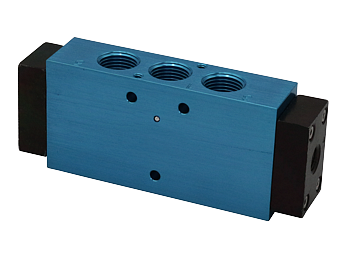




Compact Air Pilot L Series Valves - Low Temperature -40 to 123 F (-40 to 50 C)
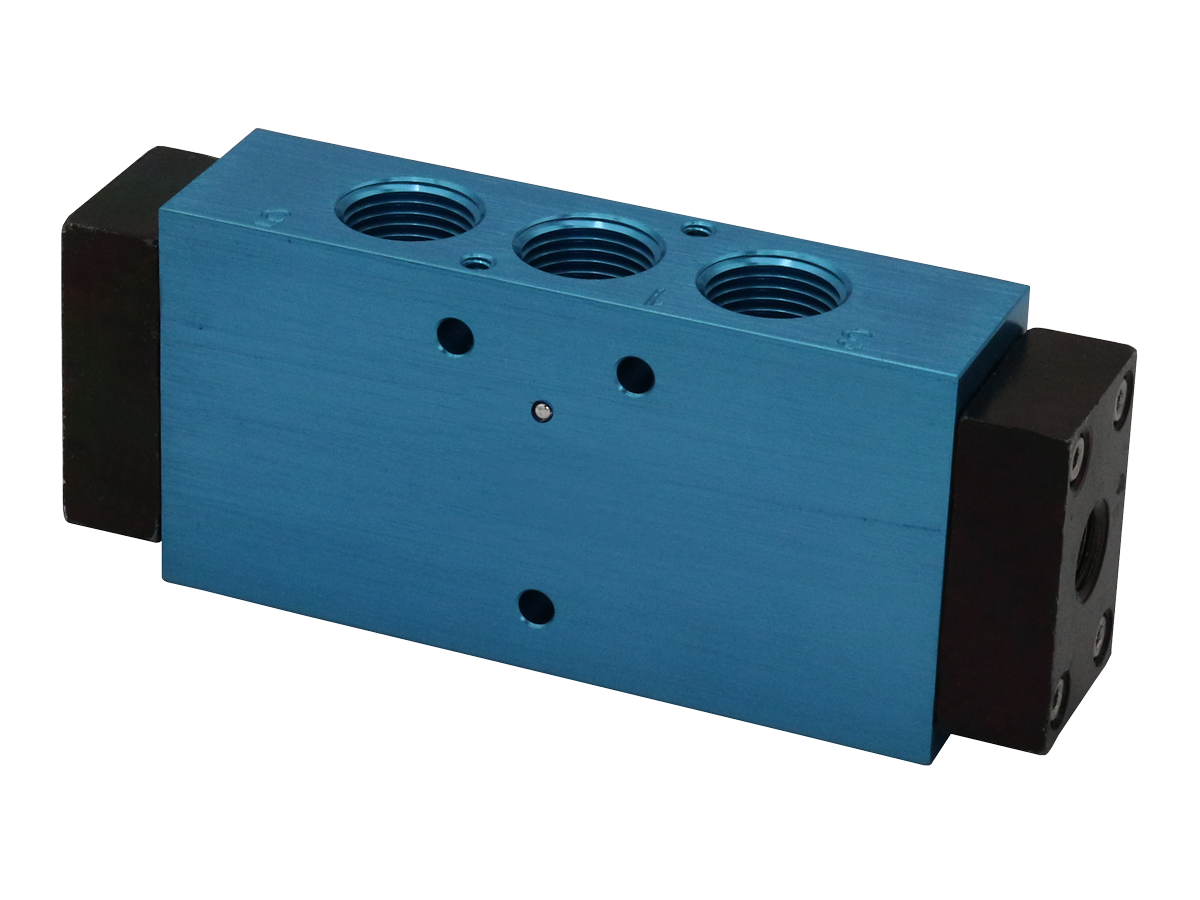
 Operating Instructions - Bottom Mount Valves
Product Catalog - Compact L Series
Operating Instructions - Top Mount Valves
Operating Instructions - Bottom Mount Valves
Product Catalog - Compact L Series
Operating Instructions - Top Mount Valves
- Compact Design - Balanced spool construction
- Tapered Tee-Seal - Bidirectional tapered Tee-Seal eliminates sticking problems
- Tested Tough - proven reliable according to SAE specifications: rust & water injected every 864,000 cycles for 20-million cycle
Valves
The AV inline L20 series valves are directional control spool valves, designed for a wide range of fluid control applications, providing users with a space-saving and lightweight design. With both inline or manifold mount, the L20 series provide flexible options for mounting. The balanced spool construction allows ports to be plugged for 2 way or 3 way function, or restricted for inexpensive cylinder exhaust speed control. A wide variety of options and operators available.
Tapered Tee-Seal ........ Eats Dirt
Bidirectional tapered Tee-Seal eliminates sticking problems.
- Flexes to clean spool
- Mechanically Locked
- No Spiral Twist
- No Extrusion
- Air Line Sediment is Wiped Away
- Tested tough and proven reliable according to SAE specifications: Rust and water injected every 864,000 cycles for 20 million cycles.
loading...
loading...
Product Overview
The Automatic Valve Compact Air Pilot L Series - Low Temperature is a pneumatically actuated 3-way directional control spool valve for applications requiring both low-temperature performance and electrical-supply-free operation. Rated from -40 to 123 F (-40 to 50 C) with no solenoid coil, no electrical wiring, and no voltage requirement, this valve is the solution for cold storage, freezer automation, arctic outdoor installations, and hazardous cold environments where both extreme temperature capability and all-pneumatic actuation are engineering requirements.
The combination of low-temperature operation and air pilot actuation addresses a specific challenge in cold chain and refrigeration automation: many hazardous cold storage facilities handling ammonia, CO2, or hydrocarbon refrigerants cannot use solenoid coils without costly explosion-proof ratings, and the extreme ambient temperatures in those same facilities eliminate the option of standard temperature pneumatic components. The Low Temperature Air Pilot L Series resolves both constraints simultaneously without compromising valve flow capacity or mechanical durability.
Built on the proven L20 platform, the Low Temperature Air Pilot valve uses Buna-N seals that retain flexibility and sealing integrity at -40 F, and a fully pneumatic pilot circuit that eliminates the solenoid coil's temperature-sensitive insulation system and electrical connection requirements from the valve assembly. The Tapered Tee-Seal design actively cleans the spool bore on every stroke, addressing the frost and condensate accumulation challenges common in freeze-thaw cycling environments near cold room entries and blast freezer openings.
Available in 3/8 and 1/2 inch port sizes with Buna-N seals and both single pilot (spring return) and double pilot (detented) body designs, the valve provides 1.8 Cv at 3/8 inch and targets standard L45-body flow rates at 1/2 inch. The 1/8 NPTF pilot port accepts any available compressed air signal within the 35 to 150 psig pilot pressure range.
Key Engineering Features
- Low-Temperature Operation to -40 F (-40 C) with No Electrical Components - The combination of Buna-N seals and all-pneumatic pilot actuation provides reliable directional control at -40 F ambient without any solenoid coil, electrical wiring, or voltage supply. This unique combination addresses the dual requirements of extreme cold and electrical-free operation in a single compact valve body.
- Balanced Spool with Tapered Tee-Seal - Bidirectional tee-shaped seal actively wipes sediment, frost particles, and condensate from the spool bore on every actuation cycle, preventing the ice and moisture-related sticking failures that affect conventional spool seals in cold, wet, and freeze-thaw cycling environments.
- SAE-Tested 20-Million-Cycle Durability - Proven reliable per SAE specifications with rust and water injection every 864,000 cycles through 20 million cycles, validating long-term service life in the high-humidity, corrosive conditions characteristic of cold storage and refrigerated processing environments.
- Single and Double Air Pilot Configurations - Single pilot (spring return) and double pilot (detented) body designs are available. The detented configuration provides last-position memory at -40 F, maintaining spool position without a sustained pilot signal in cold circuit applications.
- All-Pneumatic Construction for Hazardous Cold Locations - The absence of solenoid coils, electrical connections, and wiring eliminates ignition sources in facilities handling ammonia, CO2, hydrocarbon, and other flammable refrigerants classified as hazardous areas, without requiring costly explosion-proof electrical hardware.
- Compact Lightweight Aluminum Body - Aluminum body and spool construction provides thermal stability across the -40 to 123 F operating range with minimal thermal mass, enabling faster thermal equilibration when valves transition between warm ambient and cold service zones.
- Field-Proven Buna-N Seal Low-Temperature Performance - The Treated Buna-N (NBR) Tee-Seal remains flexible and maintains sealing integrity at -40 F, operating at or near the lower temperature boundary of standard NBR compound capability while the mechanically locked Tee-Seal design prevents extrusion at low-elasticity cold conditions.
- Compatible with Pneumatic Logic and Cascade Circuits - Pneumatic pilot input enables integration into fully pneumatic cascade sequencing systems in cold environments where PLC hardware is not rated for the minimum ambient temperature or where electrical infrastructure in the cold zone is avoided for simplification.
- Air Must Be Dry Below 40 F (4 C) - Critical operating requirement: compressed air and pilot signal air must be dried to a dew point below the minimum installation temperature to prevent ice formation in the valve body and pilot passages. This requirement applies to both the main supply and the pilot circuit.
- CE, CSA, FM, and ATEX Certified - Full certification coverage for North American and European industrial machinery and process control applications, supporting deployment in refrigeration and cold storage facilities with applicable regulatory requirements.
Technical Specifications
General Specifications
| Parameter | Specification |
| Series | L20 (Inline), L45 (1/2 inch Inline) |
| Valve Type | Directional Control Spool Valve |
| Valve Functions | 3-Way Normally Closed (3/2 NC); 3-Way Normally Open (3/2 NO) |
| Construction | Balanced Spool with Tapered Tee-Seal |
| Actuation | Pneumatic (Air Pilot) |
| Port Sizes Available (Low Temperature) | 3/8 inch (L20); 1/2 inch (L45) |
| Port Threads | NPT (standard); G/BSPP (Option W) |
| Pilot Port | 1/8 NPTF |
| Flow Capacity (L20 3/8 inch) | 1.8 Cv (1,800 Nl/min) |
| Flow Capacity (L45 1/2 inch) | 4.0 Cv (3,940 Nl/min) |
| Operating Pressure | 35 to 150 psig (2.4 to 10.3 bar) / 240 to 1,030 kPa |
| Pilot Supply Pressure | 35 to 150 psig (2.4 to 10.3 bar) |
| Ambient and Media Temperature | 40 to 123 F (-40 to 50 C) |
| Critical Air Dryness Requirement | Below 40 F (4 C): both supply and pilot air must be dried to a dew point below the minimum operating temperature |
| Flow Media | Filtered air or inert gas |
| Filtration Requirement | 50 microns or better |
| Body Material | Aluminum |
| Spool Material | Aluminum |
| Seal Material | Treated Buna-N (NBR) |
| Mounting | Inline |
| Return (Single Pilot) | Spring Return (2-Position) |
| Return (Double Pilot) | Detented (2-Position, last-position memory) |
| Electrical Supply Required | None |
Temperature Ratings
The -40 to 123 F (-40 to 50 C) rating applies to both ambient and media temperature in the Low Temperature Air Pilot configuration. When operating below 40 F (4 C), both the main compressed air supply and the pneumatic pilot signal must be dried to a dew point below the minimum operating temperature to prevent ice formation within the valve and pilot circuit. This is the single most critical installation requirement for reliable low-temperature air pilot valve performance.
| Configuration | Ambient Temperature | Media Temperature |
| Standard Buna-N Seals, Air Pilot Actuation |
Flow Performance Data
| Series | Port Size | Flow Cv | Flow Nl/min | Body Design | Weight kg (lb) |
| L20 | 3/8 inch (NPT or G) | 1.8 | 1,800 | Single or Double Pilot | 0.40 (0.9) |
| L45 | 1/2 inch (NPT or G) | 4.0 | 3,940 | Single or Double Pilot | 0.90 (1.9) |
Certifications & Compliance
| Certification/Standard | Detail |
| CSA | C22.2 and UL Standard 429 certification. The all-pneumatic construction with no electrical components is well-suited to cold storage facilities with hazardous area classifications. |
| Factory Mutual (FM) | FM approved for explosion-proof environments. Air pilot valves require no explosion-proof coil rating in themselves, as no ignition-capable components are present. |
| ATEX | ATEX certification applicable for European hazardous area facilities including ammonia refrigeration plants and cold storage facilities with flammable refrigerant classifications. |
| CE | EMC and Low Voltage Directive compliance for European machinery and process control equipment. |
Typical Applications & Industries
Hazardous Cold Storage and Refrigeration
- Ammonia refrigeration system (R-717) pneumatic actuator controls where both the extreme low ambient temperatures and the Class I, Division 1 / Zone 1 hazardous area classification of the machine room or compressor room eliminate solenoid valves as a practical option without costly explosion-proof ratings.
- CO2 refrigeration system (R-744) pneumatic controls in cold storage facilities where sub-zero ambient and potential refrigerant release create combined low-temperature and hazardous location requirements most simply addressed by all-pneumatic directional valves.
- Hydrocarbon refrigerant cold storage facility actuator circuits where low-charge natural refrigerant systems may create flammable atmosphere classifications at the valve installation point, requiring non-electrical actuation.
- Blast freezer and cold tunnel pneumatic door, loading, and product handling system actuators where both extreme cold and refrigerant hazard classification apply simultaneously within the same installation zone.
Cold Storage and Blast Freezing Automation
- Blast freezer product conveyor, product positioning, and pneumatic gate actuator circuits operating at continuous -40 F ambient where the all-pneumatic L Series eliminates solenoid coil temperature limits and wiring routing through insulated freezer walls.
- Cold chain distribution center automated storage and retrieval system pneumatic actuators in freezer-temperature zones where wireless or no-electrical zones are preferred for infrastructure simplification.
- Ice cream and frozen food production line forming, filling, and packaging actuators in -40 F freezer environments where all-pneumatic actuation avoids the cost and complexity of explosion-proof or freeze-rated electrical controls.
- Cryogenic food processing tunnel freezer pneumatic controls for conveyor drive interlocks, emergency stops, and pneumatic door actuators in areas with extreme low ambient temperatures and potential cryogenic agent release.
Arctic and Cold Climate Outdoor Installations
- Arctic oil and gas production facility wellhead and production automation pneumatic controls where sustained -40 F ambient temperature and remote location from electrical infrastructure make all-pneumatic actuation the preferred approach.
- Northern climate pipeline control and shutoff system pneumatic actuator pilots where the combination of extreme cold ambient and remote location eliminates solenoid pilot valves as a practical option.
- Cold climate mining equipment and conveyor pneumatic controls where outdoor ambient temperatures reach -40 F in winter and the pneumatic circuit can be driven from the equipment's onboard compressed air supply without electrical power at the valve.
- Cold climate transportation terminal pneumatic gate and conveyor controls where outdoor winter temperatures reach -40 F and the installation preference is for all-pneumatic simplicity in exposed, unheated locations.
Pharmaceutical and Biotech Cold Chain
- Vaccine and biologics cold storage automated retrieval system pneumatic actuators in ultra-low temperature environments where the combination of low temperature and potential flammable alcohol cleaning agent classifications requires non-electrical directional control.
- Plasma and blood product cold storage facility automation where cGMP compliance preferences for simplified, non-electrical control in product storage zones align with the all-pneumatic low-temperature valve design.
- Biorepository automated storage and retrieval pneumatic actuators in ultra-low temperature compartments requiring reliable, maintenance-minimal directional control at -40 F without electrical components.
- Cold chain validation equipment pneumatic controls where temperature-controlled test chamber automation benefits from air pilot valves that do not require electrical connections inside the temperature-controlled test environment.
Food and Beverage Cold Processing
- Cryogenic food freezing line pneumatic controls adjacent to liquid nitrogen or CO2 injection zones where low ambient temperature and potential cryogenic agent release atmospheres require non-electrical valve actuation.
- Frozen seafood and vegetable IQF freezer handling system pneumatic actuators for infeed conveyor controls, product distribution gates, and bin filling automation at -40 F ambient.
- Fish processing and cold storage facility pneumatic actuator controls where the combination of cold ambient, high humidity, wash down exposure, and potential ammonia refrigerant hazard classification makes all-pneumatic directional valves the preferred standard.
- Frozen bakery and ready-meal production line cryogenic treatment pneumatic controls for product handling, portioning, and packaging automation adjacent to cryogenic treatment equipment.
Industrial Refrigeration Support Systems
- Compressor room pneumatic control interlocks and purge system actuators in ammonia refrigeration plant machine rooms where both hazardous area classification and low ambient temperatures are design constraints.
- Evaporator defrost control pneumatic circuit directional valves for large-scale industrial refrigeration where defrost sequencing is implemented as a fully pneumatic timed cascade circuit without electrical control elements.
- Refrigerant transfer and emergency vent pneumatic circuit directional controls in cold storage facilities where fail-safe last-position memory using double air pilot detented valves provides a defined circuit state on pneumatic supply loss.
- Cold chain logistics facility loading dock and staging area pneumatic door and barrier actuators in unheated or minimally heated environments where winter ambient temperatures regularly fall to -40 F.
Ordering and Model Number Configuration
Air pilot valves do not require a voltage code suffix. The model number ends after the operator codes.
For the Low Temperature Air Pilot series, port sizes are available in 3/8 inch (L20) and 1/2 inch (L45). Consult Automatic Valve for 1/4 inch availability in low-temperature air pilot configurations.
For G (BSPP) threads on all ports, add suffix W to the model number.
Dustproof option (suffix D) is recommended for cold storage and freezer installations to prevent frost ingress through vent ports.
The double pilot (body design B) provides last-position memory, retaining the last spool position when both pilot signals are absent. Verify that this behavior is safe for the application before specifying.
Coil-related options (CT, Y, Z, V) do not apply to air pilot models. For hazardous cold locations, the all-pneumatic construction is the recommended approach.
Related Products & Accessories
- Compact Air Pilot L Series - Standard Temperature - L Series air pilot spool valves for standard temperature applications, -20 to 123 F (-29 to 50 C). https://www.automaticvalve.com/series/2995-compact-air-pilot-l-series-valves-standard-temperature
- Compact Solenoid L Series - Low Temperature Applications - L Series solenoid spool valves rated -40 to 123 F with electrical solenoid pilot actuation for cold environments with electrical supply available. https://www.automaticvalve.com/series/2978-compact-solenoid-l-series-valves-low-temperature-applications
- Compact Solenoid L Series - Standard Temperature Applications - L Series solenoid spool valves for standard temperature applications with electrical solenoid pilot actuation. https://www.automaticvalve.com/series/2979-compact-solenoid-l-series-valves-standard-temperature-applications
- Compact Solenoid L Series - High Temperature Applications - L Series solenoid spool valves with CT coil option rated 0 to 180 F (-18 to 82 C). https://www.automaticvalve.com/series/2977-compact-solenoid-l-series-valves-high-temperature-applications
- Compact Solenoid L Series - CSA/FM Explosion-Proof - L Series with CSA and FM explosion-proof solenoid coils for hazardous location applications where electrical actuation is required. https://www.automaticvalve.com/series/2980-compact-solenoid-l-series-valves-csafm-standard-temperature-applications
Frequently Asked Questions (FAQ)
Q: What is the minimum operating temperature for the Low Temperature Air Pilot L Series?
A: The minimum operating temperature is -40 F (-40 C) for both ambient and media conditions. This rating is achieved with the standard Buna-N seal material and all-pneumatic actuation without any coil temperature limits. No special seal upgrade or coil option is required.
Q: Why is the all-pneumatic design specifically advantageous at low temperatures?
A: At low temperatures, solenoid coil insulation materials can become brittle, coil efficiency decreases as resistance changes with temperature, and moisture ingress risks increase if coil enclosures are not perfectly sealed. The all-pneumatic air pilot design has no coil, no insulation, no electrical connection, and no temperature-sensitive electrical component in the valve assembly. The mechanical performance depends entirely on seal flexibility and spool geometry, both of which are specified for -40 F operation.
Q: What port sizes are available in the Low Temperature Air Pilot configuration?
A: The Low Temperature Air Pilot L Series is available in 3/8 inch port size in the L20 body (1.8 Cv, 1,800 Nl/min) and 1/2 inch port size in the L45 body (4.0 Cv, 3,940 Nl/min). For 1/4 inch port size requirements in low-temperature air pilot applications, consult Automatic Valve for availability.
Q: Why must pilot air also be dried for temperatures below 40 F?
A: The pneumatic pilot circuit passes through the same valve body and spool assembly as the main air circuit. Any moisture in the pilot signal air will freeze in the pilot passage at temperatures below 32 F (0 C), blocking the pilot circuit and preventing the spool from shifting. Drying the pilot air to a dew point below the minimum installation temperature is as critical as drying the main air supply.
Q: Can this valve be used in ammonia refrigeration machine rooms?
A: Yes. The all-pneumatic construction with no solenoid coils, no wiring, and no electrical connections eliminates the electrical ignition source concern in ammonia (R-717) hazardous area machine rooms. Verify the specific hazardous area classification of the installation with the applicable authority having jurisdiction. CSA, FM, and ATEX certifications apply to the product family.
Q: What is the difference between single pilot spring return and double pilot detented?
A: Single pilot spring return shifts the spool when a pilot signal is applied and springs back to the neutral position when the signal is removed, providing a defined safe state on pilot air loss. Double pilot detented shifts the spool in response to momentary pilot signals and retains the last position when both pilot signals are absent. The detented design is appropriate for circuits where last-position retention is a functional requirement; verify that the retained position is safe under all fault conditions.
Q: What flow capacity does the Low Temperature Air Pilot L Series provide?
A: Flow capacity is 1.8 Cv (1,800 Nl/min) for the L20 body in 3/8 inch port size, and 4.0 Cv (3,940 Nl/min) for the L45 body in 1/2 inch. These ratings are identical to all other L Series configurations at the same body and port sizes.
Q: Is the Dustproof option recommended for cold storage installations?
A: Yes. Option D (Dustproof) plugs the vent ports and eliminates the spring pad breather vent, preventing frost crystals, condensate, and airborne frost particles from entering the valve through atmospheric vent paths. In blast freezer and cold room environments with high frost loading in the air, the Dustproof option is strongly recommended to prevent gradual ingress of moisture and frost into the spool chamber.
Q: Can the valve be used for vacuum applications?
A: The air pilot configuration requires a positive pilot pressure of 35 to 150 psig at the pilot port to shift the spool. For vacuum or low-pressure main circuit applications where port 1 pressure falls below 35 psig, the pilot must be supplied from a separate 35 to 150 psig source connected to the 1/8 NPTF pilot port. There is no internal pilot option in the air pilot body design.
Q: What lubrication is recommended for cold temperature air pilot applications?
A: Lubrication is not required but is recommended for maximum service life. Use petroleum-based oil with an ISO 32 viscosity and aniline range of 82 to 99 C (180 to 210 F) that remains pourable at the minimum installation temperature. Filter lubricant to 50 microns. Avoid lubricants that thicken or gel at low temperatures, as viscous lubricant accumulation in the spool bore can impair valve shifting at -40 F.
Q: What filtration is required?
A: Both main supply air and pilot signal air must be filtered to 50 microns or better. Below 40 F (4 C), both air streams must also be dried to a dew point at or below the minimum installation temperature. Use filters and dryers rated for the minimum installation temperature and locate them upstream of the cold zone wherever possible.
Q: What is the typical lead time for Low Temperature Air Pilot L Series valves?
A: Standard manufacturing lead times for quantities of 10 or fewer units are typically 3 to 4 weeks, with shipping available throughout the United States.
Installation & Maintenance Guidelines
- Dry both the main compressed air supply and the pneumatic pilot signal air to a dew point below the minimum installation temperature before entering the cold zone. This is the single most critical installation requirement. A refrigerated compressed air dryer rated for the installation dew point is required for any installation where valve temperature drops below 40 F (4 C).
- Supply filtered air at 50 microns or better to both the main supply port and the pilot supply line. In cold environments where air system condensate may accumulate between shutdowns, drain filter bowls before starting production.
- For installations where temperature cycling between warm ambient (loading dock entry, maintenance periods) and -40 F cold storage ambient occurs frequently, allow the valve to equilibrate to the installation ambient before the first high-cycle production run after each temperature transition.
- For dustproof operation in freezers where frost accumulation could block vent ports, specify Option D (Dustproof). Plugging the vent ports eliminates frost ingress through the atmospheric vent path.
- Connect the 1/8 NPTF pilot port using tubing and fittings rated for the minimum operating temperature. Verify that the pilot tube material remains flexible at -40 F; some plastics become brittle at extreme cold and may crack under vibration.
- The double pilot (detented) body provides last-position memory: the spool retains position when pilot signal is removed. Verify that the last-position state is acceptable and safe in all foreseeable fault conditions before selecting the detented configuration.
- Locate valve manifolds or individual valve stations on the warm side of cold room insulation walls where practical, routing pneumatic tubing to actuators in the cold zone. This reduces the number of valves and electrical or pneumatic components exposed to the most extreme ambient temperatures while retaining full directional control in the cold circuit.
Warranty & Global Support
Automatic Valve, a ROSS Controls company, provides a standard warranty on all products covering defects in material and workmanship from date of purchase.
Technical support and product configuration assistance are available through Automatic Valve at (248) 474-6761.
For complete technical data, dimensional drawings, CAD models, and ordering configuration for the Low Temperature Air Pilot L Series, visit automaticvalve.com or contact the factory for application-specific guidance on hazardous cold environment installations.
Estimated ship dates are based on standard manufacturing times for quantities of 10 or fewer. Shipments are available throughout the United States.
Product Catalog - L Series Compact Inline Valves: https://www.automaticvalve.com/documents/6533/Compact_Inline_Valves_L_Series_AV-IV-L_EN.pdf
Service Instructions - Compact Inline Spool Valves: https://www.automaticvalve.com/documents/405/Compact_Inline_Valves_Service_Information_Form_AV-Compact-IL_OI.pdf
Download Documents
Compact Air Pilot L Series Valves - Low Temperature