



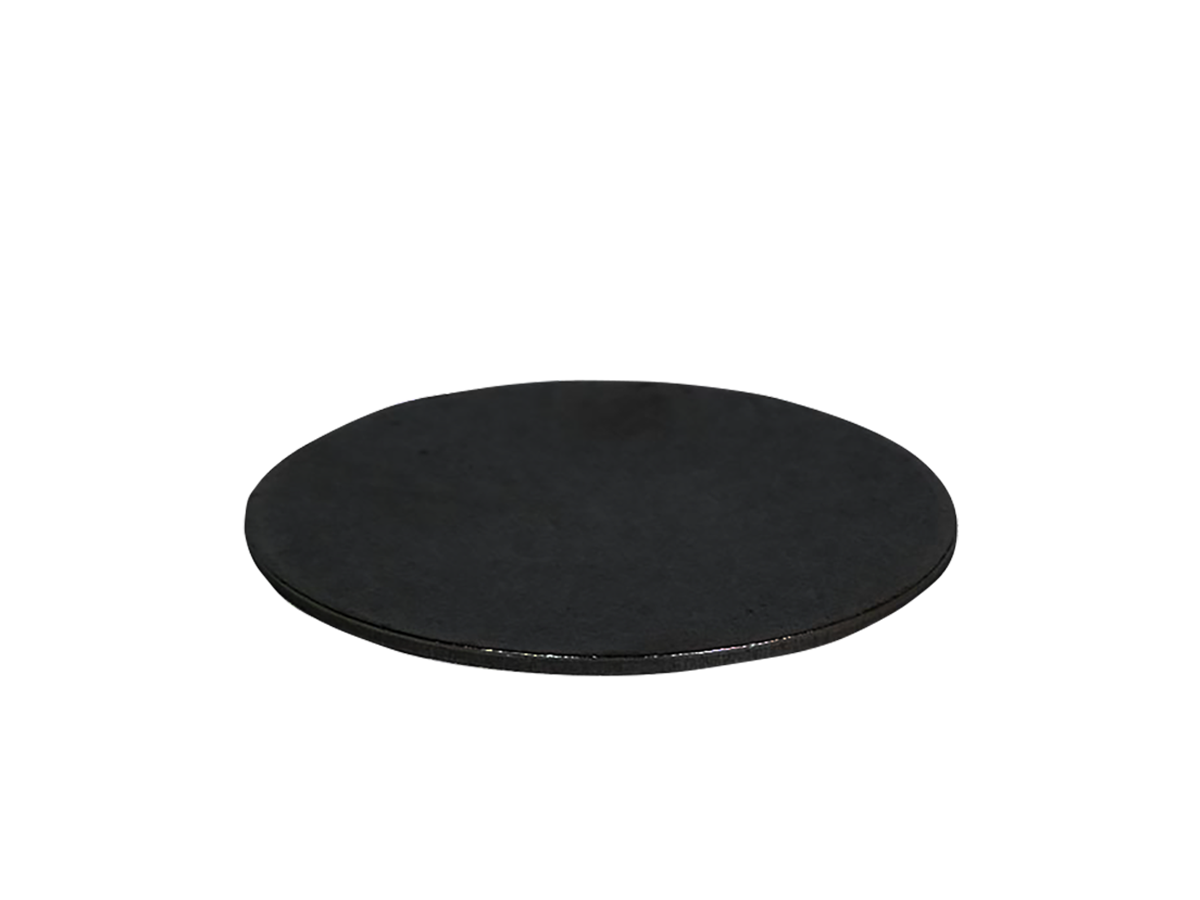
Blocking Disks Port Isolation
loading...
loading...
Product Overview
The Automatic Valve Blocking Disks are precision-engineered port isolation components designed to seal unused or temporarily disabled ports on pneumatic directional control valve sandwich bases, manifolds, and sub-base mounting surfaces. When a pneumatic system is built around a common manifold or sub-base platform, not every port position is always active. Without a reliable sealing solution, open ports create leak paths, contamination ingress points, and pressure loss that degrade overall system efficiency.
Blocking disks provide a simple, code-compliant, and reusable method to cap off these ports. Each disk seats firmly against the machined mounting face to create a positive seal with no tools required beyond the fasteners that hold the valve assembly together. The Series is available in two variants to match different valve body and mounting flange configurations, making them compatible with Automatic Valve directional control valve sub-bases and NAMUR-interface actuator mounting systems.
Design engineers and maintenance technicians working on multi-station manifold builds rely on blocking disks to eliminate system leakage from unoccupied stations, prevent contamination entry during installation or maintenance windows, and preserve the rated working pressure across the entire manifold assembly. The disks are a cost-effective solution compared to leaving ports uncapped or relying on tape and temporary plugs that can compromise system integrity.
For OEM builders standardizing on a manifold architecture that supports future valve additions, blocking disks allow the base to be installed and commissioned in a partial configuration today, with port positions reserved for expansion without any structural modification. This approach reduces assembly lead time and supports phased system deployments in complex automation architectures.
Key Engineering Features
- Positive Port Sealing - Each blocking disk creates a leak-free seal against the machined manifold or sub-base face, eliminating pressure loss from unused port positions.
- Reusable Design - Disks can be installed, removed, and reinstalled repeatedly without degradation, supporting system reconfiguration and phased valve additions over the system lifecycle.
- Multiple Size Variants - The Series is offered in two models (A7105-202 and A8020-202) to match different valve body and flange sizes within the Automatic Valve product platform.
- Compatible with Automatic Valve Manifold Systems - Designed to interface directly with Automatic Valve sub-base manifolds and sandwich-style mounting systems, ensuring proper face seal geometry and bolt pattern alignment.
- Contamination Prevention - Sealing unused ports during installation, commissioning, and maintenance prevents airborne particulate and moisture from entering the pneumatic circuit through open port faces.
- No Special Tools Required - Blocking disks are held in place by the standard valve mounting hardware, requiring no additional fasteners or adhesives.
- System Expansion Ready - Allows OEM builders to install full manifold bases at initial build and cap unused stations, preserving port access for future valve additions without system downtime or structural changes.
- Low Profile Construction - Compact disk form factor maintains the overall stack height of the valve assembly without adding unnecessary dimension to the manifold footprint.
Technical Specifications
General Specifications
| Parameter | Specification |
| Series | Blocking Disks |
| Function | Port isolation and sealing for unused manifold or sub-base ports |
| Models Available | A7105-202; A8020-202 |
| Mounting Method | Retained by standard valve mounting fasteners against sub-base or manifold face |
| Compatible Systems | Automatic Valve directional control valve manifolds and sub-base mounting assemblies |
| Body Material | Engineered thermoplastic or aluminum (verify on product datasheet per model) |
| Seal Interface | Face seal against machined manifold port surface |
| Thread | No threaded connection; face-seal type, retained by assembly hardware |
| Standard Operating Pressure | Compatible with rated pressure range of the host manifold assembly |
| Media | Filtered compressed air; dry inert gases |
Certifications & Compliance
| Certification/Standard | Detail |
| CE Compliance | Compatible with CE-marked Automatic Valve manifold assemblies when used as intended within rated operating parameters. |
| Material Safety | Constructed from materials compatible with filtered compressed air and standard industrial pneumatic media. |
Typical Applications & Industries
Automation and Assembly Manufacturing
- Multi-station manifold assemblies on automated assembly lines where some valve stations are populated initially and others are reserved for future tooling or process additions.
- Robot end-of-arm tooling manifolds where blocking disks isolate unused ports between process changeovers, preventing pressure bleed-off and maintaining tool positioning integrity.
- Conveyor and material handling systems built on standardized manifold platforms that support multiple product variants with different pneumatic circuit requirements.
Packaging and Processing Equipment
- Packaging machine manifolds with configurable station counts, where blocking disks seal inactive ports during initial machine qualification and are removed as additional pneumatic functions are commissioned.
- Food and beverage processing lines using manifold-mounted valve systems where hygiene and contamination control during maintenance require all open ports to be sealed.
- Pharmaceutical packaging equipment where ISO cleanliness standards mandate that no unintended air pathways exist in the pneumatic circuit.
OEM Machine Builders
- Standard machine platforms built to a common manifold footprint that serve multiple customer configurations, with blocking disks covering ports not activated in each specific build variant.
- Industrial presses, injection molding machines, and process equipment with configurable pneumatic circuits where manifold port count exceeds the active valve count in any given machine configuration.
- Custom automation builders who standardize on Automatic Valve manifold sub-bases across multiple product lines and use blocking disks to differentiate configurations without changing hardware.
Maintenance, Repair, and Overhaul Operations
- Field service teams replacing individual valve stations within a multi-valve manifold, using blocking disks to temporarily seal the open port while a replacement valve is sourced.
- Planned maintenance shutdowns where valve stations are removed for inspection or seal replacement, and blocking disks maintain circuit integrity for the remaining active stations.
- System upgrades where manifold capacity is expanded and new port positions are initially sealed with blocking disks pending full circuit commissioning.
Semiconductor and Electronics Manufacturing
- Clean room pneumatic systems using manifold valve arrays for process gas and air control, where unused ports must be sealed to maintain the clean room contamination control protocol.
- Wafer handling and substrate transport systems using multi-station manifolds where individual station activation is controlled by production recipe, with blocking disks sealing inactive stations.
Energy and Process Industries
- Oil and gas skid-mounted control panels using pneumatic valve manifolds for instrument air distribution, where blocking disks protect unused ports from hydrocarbon vapor ingress.
- Power generation facilities with pneumatic actuator manifolds controlling damper and valve positions, where port isolation during commissioning phases is required by safety procedures.
Ordering and Model Number Configuration
Select the blocking disk model that matches the valve body size and mounting flange configuration of your Automatic Valve manifold or sub-base assembly.
Order one blocking disk per unused port position on the manifold or sub-base assembly.
Verify compatibility with the specific manifold model number and valve body size before ordering. Contact Automatic Valve at (248) 474-6761 for configuration assistance.
Blocking disks are supplied individually. Order quantity equal to the number of unused port positions in the planned valve assembly.
Blocking Disk Model Selection
| Model Number | Description | Price (USD) | Compatibility |
| A7105-202 | Blocking Disk - Port Isolation | $13.25 | A7105 Series valve body size |
| A8020-202 | Blocking Disk - Port Isolation | $13.75 | A8020 Series valve body size |
Related Products & Accessories
- Manifolds (Valve Manifolds) - Automatic Valve multi-station sub-base manifolds for D03 and D05 pattern directional control valves. https://www.automaticvalve.com/series/227-manifolds
- Mounting Kit (Namur Interface D20 Series) - Mounting hardware kit for NAMUR interface valve-to-actuator connections with extended face configurations. https://www.automaticvalve.com/series/223-mounting-kit
- Pressure Regulator (Sandwich Regulator) - Single and double sandwich regulators for SAE series valves, stacking between valve and sub-base. https://www.automaticvalve.com/series/2892-pressure-regulator
- Directional Control Valves - Automatic Valve solenoid-operated directional control valves for sub-base and manifold mounting. https://www.automaticvalve.com/categories
Frequently Asked Questions (FAQ)
Q: What is a blocking disk and why is it needed?
A: A blocking disk is a solid sealing disk installed over an unused port on a pneumatic valve manifold or sub-base. It prevents compressed air leakage, stops contamination from entering the circuit through the open port, and maintains the pressure integrity of the active portion of the manifold assembly.
Q: How does a blocking disk differ from a pipe plug?
A: A blocking disk is a face-seal type component that seats flat against the manifold surface and is held in place by the valve mounting hardware, requiring no additional fasteners or thread engagement. A pipe plug threads into a ported connection, which is not available on the face of a sandwich-style sub-base manifold.
Q: Which blocking disk model do I need for my manifold?
A: Model A7105-202 is designed for the A7105 valve body size, and A8020-202 is for the A8020 valve body size. Match the model number to your manifold or sub-base series. Contact Automatic Valve at (248) 474-6761 if you are unsure which model is correct for your application.
Q: Can blocking disks handle full system working pressure?
A: Yes. Blocking disks are rated for use within the working pressure range of the host manifold and valve assembly. They are not the pressure-limiting component; the manifold body and valve ratings govern maximum system pressure.
Q: Are the blocking disks reusable?
A: Yes. The disks can be removed and reinstalled repeatedly when reconfiguring the manifold, adding valve stations, or during maintenance operations without performance degradation.
Q: Do I need special tools to install a blocking disk?
A: No. Blocking disks are retained by the standard valve mounting bolts. No additional fasteners, adhesives, or special tools are required. Follow the torque specifications for the valve mounting hardware as specified in the manifold installation instructions.
Q: How many blocking disks do I need?
A: Order one blocking disk per unused port position on the manifold. For example, a 4-station manifold with only 2 valves installed requires 2 blocking disks to seal the remaining 2 port positions.
Q: Can blocking disks be used with all Automatic Valve manifolds?
A: The Series blocking disks are designed to match specific Automatic Valve manifold and sub-base port face dimensions. Verify that the model number corresponds to your specific manifold series before ordering. Cross-compatibility with other manifold brands is not guaranteed.
Q: What media can be used with the series blocking disks?
A: The disks are rated for filtered compressed air and dry inert gases. They are not designed for hydraulic fluid, water, or aggressive chemical media without specific material verification.
Q: Is there a seal or O-ring included with the blocking disk?
A: The face-seal design of the blocking disk creates a seal through surface contact against the machined manifold face. Refer to the product technical datasheet or contact Automatic Valve to confirm whether an O-ring is included or separately required for your specific manifold interface.
Q: Can I use a blocking disk on a pressurized manifold?
A: Blocking disks should be installed and removed with the system depressurized. Always follow proper lockout/tagout and energy isolation procedures before opening or modifying any pneumatic manifold assembly.
Q: Where can I get technical support or application assistance?
A: Contact Automatic Valve at (248) 474-6761 or visit automaticvalve.com for product configuration support, compatibility guidance, and distributor referrals.
Installation & Maintenance Guidelines
- Depressurize and lockout/tagout the pneumatic system before installing or removing blocking disks from any manifold or sub-base assembly.
- Verify that the blocking disk model number matches the manifold or sub-base port face configuration before installation.
- Ensure the manifold port face is clean and free of debris, old sealant, or damaged sealing surfaces before installing the blocking disk.
- Position the blocking disk squarely over the unused port face opening before installing valve mounting bolts.
- Torque the valve mounting bolts to the manifold manufacturer specification to ensure proper clamping force and seal engagement.
- Do not use thread sealant or adhesive on blocking disk face surfaces, as these can contaminate the manifold port bore.
- Inspect the blocking disk sealing face for damage or contamination each time the disk is reinstalled.
- Label or document any blocked port positions in the system schematic to ensure clarity for future maintenance personnel.
- After installation, pressurize the system to working pressure and verify there are no leaks at the blocked port positions using leak detection solution or an ultrasonic leak detector.
- Store removed blocking disks in a clean, dry location to prevent damage to sealing surfaces during storage or transport.
Warranty & Global Support
Automatic Valve products are backed by a one-year warranty covering defects in material and workmanship from the date of purchase.
Technical support is available through Automatic Valve at (248) 474-6761 or through the contact form at automaticvalve.com.
Automatic Valve is a member of the ROSS Controls global family, with support resources available through ROSS Global offices worldwide.
For replacement parts, service kits, and compatible accessories, visit automaticvalve.com or contact your authorized Automatic Valve distributor.
Download Catalog: https://www.automaticvalve.com/documents/415/AV_Compact_L-Series_Manual-Mechanical_Valves_AV-C-MMV_en.pdf
Download Documents
Blocking Disks