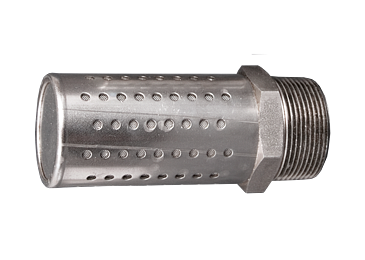




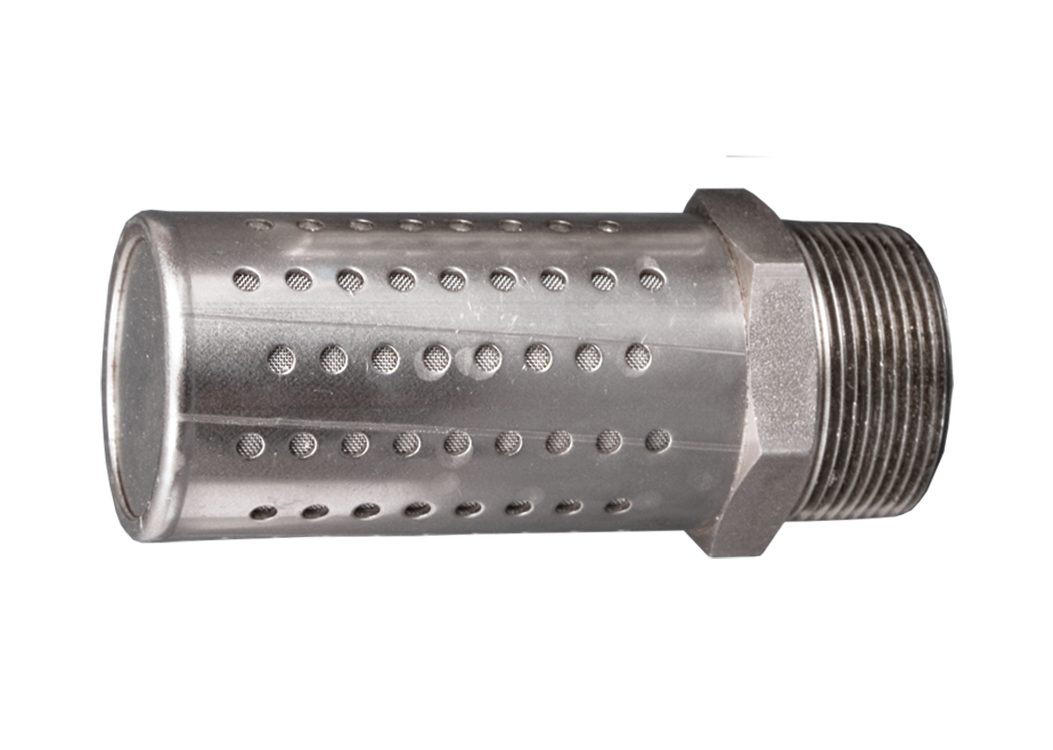
Silencers Exhaust Mufflers, Exhaust Restricters
 Product Catalog
- Reduces exhaust noise
- Diffuses exhausting air
- Back pressure, minimal
loading...
loading...
Product Overview
The Automatic Valve Silencers are pneumatic exhaust noise reduction accessories designed to be threaded directly into the exhaust ports of directional control valves, pneumatic actuators, and related pneumatic components. When compressed air is exhausted from a directional control valve, the rapid pressure drop through the exhaust port creates a high-velocity air blast that generates significant broadband noise. In an industrial environment with multiple pneumatic cylinders and valves cycling continuously, cumulative exhaust noise can exceed OSHA-mandated workplace noise limits and create hazardous working conditions.
The Series uses a sintered or porous metallic or polymer matrix construction to break up the high-velocity exhaust stream into multiple smaller streams, reducing the pressure differential at any single exit point and dramatically lowering the sound pressure level generated by each exhaust event. The design also acts as an exhaust restricter, providing controlled flow resistance that can be used to meter the exhaust rate and thereby regulate actuator speed on the return stroke.
Four models are offered (266B-2, 84C-3, 84C-5, 84C-7) to span the range of exhaust port sizes found on Automatic Valve directional control valves, from compact pilot-duty valves with small exhaust ports to larger main valves with high flow exhaust requirements. The critical selection criterion is that the silencer flow capacity must equal or exceed the exhaust capacity of the valve it serves. Undersized silencers create back pressure at the exhaust port that degrades valve response time, increases actuator cycle time, and can interfere with valve shifting.
In addition to noise reduction and flow control functions, the series silencers also help prevent contaminants from entering the valve body through the exhaust port when the valve is de-energized. The porous element acts as a barrier against dust, insects, and coarse particulate that would otherwise be drawn into the exhaust port and could contaminate internal valve seals.
Key Engineering Features
- Exhaust Noise Reduction - Porous sintered construction breaks up high-velocity exhaust air into distributed low-velocity streams, reducing exhaust noise to support OSHA compliance and protect personnel hearing in industrial environments.
- Minimal Back Pressure Design - Engineered to provide effective noise attenuation while minimizing back pressure at the valve exhaust port. Silencer flow capacity must match or exceed the valve exhaust capacity to prevent performance degradation.
- Exhaust Air Diffusion - Diffuses the exhaust air blast to prevent high-velocity air jets that could create safety hazards for nearby personnel or dislodge contaminants on machine surfaces.
- Exhaust Restricter Function - The Series models can provide a degree of exhaust flow restriction that can be applied to control actuator return speed, reducing shock loads on actuator cushions and mechanical end stops.
- Contamination Exclusion - The porous element acts as a physical barrier to prevent dust, debris, and insects from entering the valve exhaust port when the valve is in the de-energized state.
- Four Available Models - Models 266B-2, 84C-3, 84C-5, and 84C-7 provide coverage across multiple exhaust port sizes and flow capacities to match the full range of Automatic Valve directional control valves.
- Direct Thread Installation - Silencers thread directly into the valve exhaust port with no additional fittings or adapters required, minimizing installation time and eliminating potential leak points.
- Product Catalog Available - A product catalog with technical data, dimensions, and flow capacity ratings is available at automaticvalve.com for engineering specification and selection.
Technical Specifications
General Specifications
| Parameter | Specification |
| Series | Silencers - Exhaust Mufflers, Exhaust Restricters |
| Models Available | 266B-2; 84C-3; 84C-5; 84C-7 |
| Function | Exhaust noise reduction; air diffusion; exhaust restriction; contamination exclusion |
| Construction | Sintered or porous metallic / polymer matrix element in threaded body |
| Installation | Threaded directly into valve exhaust port |
| Flow Capacity | Must equal or exceed the exhaust flow capacity of the valve being served |
| Media | Compressed air exhaust; pneumatic system exhaust gases |
| Operating Pressure | Rated for standard industrial compressed air working pressures (see product catalog for specific model ratings) |
| Catalog Available | Yes - download at automaticvalve.com/series/226-silencers |
Certifications & Compliance
| Certification/Standard | Detail |
| OSHA Noise Compliance Support | Silencers are designed to reduce valve exhaust noise levels to support compliance with OSHA 29 CFR 1910.95 workplace noise exposure standards. Actual noise reduction depends on valve size, cycle rate, and installation environment. |
| CE Compatibility | Suitable for installation on CE-marked pneumatic valve assemblies within the rated operating parameters of the host valve and system. |
Typical Applications & Industries
Automotive and Metal Fabrication
- Press rooms and stamping lines where high-cycle directional control valves generate significant exhaust noise from rapid cycling, and silencers are required to achieve OSHA compliance for line workers.
- Automated welding and assembly cells with multiple pneumatic cylinders cycling continuously, where cumulative exhaust noise from unsilenced valves creates hazardous noise environments.
- Metal forming and bending operations where pneumatic clamps and fixtures cycle frequently and unsilenced exhaust creates noise that interferes with voice communication and machinery alarm audibility.
Packaging and Material Handling
- High-speed packaging lines with dozens of pneumatic cylinders cycling per minute, where silencers are required on all valve exhausts to comply with factory noise regulations.
- Palletizing and depalletizing systems with large-bore pneumatic cylinders exhausting large air volumes rapidly, requiring higher-flow silencer models to prevent back pressure degradation.
- Conveyor sorting and diverter systems where solenoid valve exhaust noise levels are amplified by the confined space of conveyor enclosures.
Food and Beverage Processing
- Food processing environments where unsilenced valve exhaust creates contamination risk from high-velocity air blasts dislodging particulate from surfaces near open food product.
- Bottling and canning lines with high-cycle pneumatic actuators where both noise reduction and exhaust air diffusion are required for personnel safety and product hygiene.
- Bakery and confectionery production where dusty environments make contamination exclusion through the silencer element an important secondary benefit.
General Industrial Manufacturing
- Machine shop environments with pneumatic workholding and tool actuation where valve exhaust noise adds to the overall noise level near CNC equipment operators.
- Assembly stations where operators work in close proximity to pneumatic tool and fixture valves, and exhaust noise reduction is required for sustained occupational exposure compliance.
- Industrial test benches and dynamometer facilities where valve exhaust noise must be controlled to enable accurate acoustic measurements.
Pharmaceutical and Medical Device Manufacturing
- Cleanroom valve exhaust points where diffused, filtered exhaust is required to prevent contamination of the cleanroom environment from high-velocity air blasts.
- Medical device assembly lines where noise levels are controlled to support worker concentration and comply with facility noise policies.
Oil, Gas, and Process Industries
- Pneumatic actuator vent ports on process control valves in outdoor installations where silencers exclude rain, insects, and wind-blown debris from entering through the exhaust port.
- Compressor and pump control panels where solenoid valve exhaust ports are fitted with silencers to reduce noise in areas near operator workstations.
Ordering and Model Number Configuration
Select the silencer model whose port size and flow capacity matches or exceeds the exhaust port specification of the valve being served. Undersized silencers cause valve back pressure and degrade system performance.
Refer to the valve technical datasheet for the exhaust port thread size and maximum exhaust flow rate before selecting a silencer model.
A product catalog with full technical data is available at automaticvalve.com/series/226-silencers.
Contact Automatic Valve at (248) 474-6761 for application-specific selection guidance.
Silencer Model Selection
| Model Number | Price (USD) | Notes |
| 266B-2 | $11.75 | Exhaust muffler/restricter, smaller port size |
| 84C-3 | $13.75 | Exhaust muffler/restricter |
| 84C-5 | $19.50 | Exhaust muffler/restricter, medium port size |
| 84C-7 | $26.50 | Exhaust muffler/restricter, larger port size |
Accessories
Product Catalog
A downloadable product catalog is available for the series Silencers at automaticvalve.com. The catalog includes dimensional drawings, flow capacity data, thread specifications, and port size compatibility information.
Related Products & Accessories
Frequently Asked Questions (FAQ)
Q: Why must the silencer flow capacity equal or exceed the valve exhaust capacity?
A: If the silencer flow capacity is less than the valve exhaust flow rate, the silencer becomes a flow restriction in the exhaust circuit. This creates back pressure at the valve exhaust port that slows valve shifting, increases actuator cycle time, and in severe cases can prevent the valve from exhausting fully and cycling correctly. The silencer must be sized to pass the full exhaust flow without significant restriction.
Q: How much noise reduction can I expect from a silencer?
A: Pneumatic exhaust silencers typically reduce exhaust noise by 10 to 25 dB(A) depending on the silencer model, valve size, and operating pressure. Actual results vary with the specific installation and cycle rate. Consult the product catalog flow and acoustic data for the selected silencer model.
Q: Can I use the silencer to adjust actuator speed?
A: Yes, the series silencers provide a fixed exhaust restriction that produces some reduction in exhaust flow rate compared to an open port, which can slow actuator retraction speed. However, for precise speed control, an adjustable flow control valve with an exhaust port silencer provides a more controllable solution.
Q: What thread size is the silencer?
A: Refer to the product catalog or individual model technical datasheet for the specific thread size of each model. The thread must match the exhaust port thread specification of the valve. Contact Automatic Valve at (248) 474-6761 to confirm the correct model for your specific valve.
Q: How do I know if my silencer is contaminated and needs replacement?
A: Contaminated silencers show increased exhaust restriction, visible clogging of the porous element, or audible changes in exhaust sound character. Inspect silencers regularly in dusty or humid environments. A contaminated silencer that creates excessive back pressure should be replaced immediately to restore valve performance.
Q: Can silencers be cleaned and reused?
A: Some sintered metal silencer elements can be cleaned by blowing out with clean compressed air from the inside out. However, if the element is deeply contaminated with oil, dust, or corrosion, replacement is more reliable than cleaning. Do not use solvents that could damage the element material.
Q: Are the silencers suitable for outdoor installation?
A: The Series silencers are suitable for standard industrial environments including outdoor installations where they provide contamination exclusion from the exhaust port. In severe weather or corrosive environments, verify the material compatibility of the silencer body and element with the installation conditions.
Q: Do the silencers affect valve response time?
A: A properly sized silencer with flow capacity matching or exceeding the valve exhaust capacity does not significantly affect valve response time. An undersized silencer increases exhaust back pressure, which directly slows the valve shift time and actuator cycle time.
Q: What is the maximum pressure rating for the series silencers?
A: Refer to the individual model technical datasheets in the product catalog for pressure ratings. Contact Automatic Valve at (248) 474-6761 or visit automaticvalve.com for detailed technical data.
Q: Can silencers be installed on valves other than Automatic Valve products?
A: Yes, provided the silencer thread size matches the exhaust port thread of the target valve and the flow capacity is sufficient for that valve's exhaust rate. The Series silencers are standard industrial threaded accessories compatible with any pneumatic valve with a matching exhaust port thread.
Q: Do silencers require any maintenance?
A: Silencers should be inspected periodically for contamination, clogging, and physical damage. In contaminated environments, inspection frequency should be increased. Replace silencers that show flow restriction due to clogging or are physically damaged.
Q: Where can I download the product catalog for the series?
A: The product catalog for the series Silencers is available for download at automaticvalve.com/series/226-silencers. Contact Automatic Valve at (248) 474-6761 for additional technical information.
Installation & Maintenance Guidelines
- Depressurize and lockout/tagout the pneumatic system before installing or replacing silencers on valve exhaust ports.
- Select the silencer model whose flow capacity equals or exceeds the maximum exhaust flow rate of the valve at the highest expected operating pressure.
- Verify that the silencer port thread matches the valve exhaust port thread specification before installation.
- Apply a small amount of thread sealant or PTFE tape to the silencer threads if required by the installation environment, but avoid introducing sealant into the exhaust port bore.
- Thread the silencer into the exhaust port by hand until snug, then tighten with the appropriate wrench. Do not over-tighten, as this can crack sintered metal elements.
- Orient the silencer exhaust face away from personnel, electrical components, and sensitive equipment that could be affected by directed exhaust air.
- After installation, restore system pressure and cycle the valve to verify correct operation. Listen for any unusual sound changes that could indicate a clogged or incorrectly sized silencer.
- Inspect silencers regularly, especially in dusty or humid environments where clogging can develop faster.
- Replace any silencer that shows signs of physical damage, heavy contamination, or increased flow restriction that cannot be resolved by cleaning.
- Keep a spare set of silencers on hand to minimize downtime during maintenance replacements.
Warranty & Global Support
Automatic Valve products are backed by a one-year warranty covering defects in material and workmanship from the date of purchase.
Technical support is available through Automatic Valve at (248) 474-6761 or through the contact form at automaticvalve.com.
Automatic Valve is a member of the ROSS Controls global family, with support resources available through ROSS Global offices worldwide.
For replacement silencers and compatible valve accessories, visit automaticvalve.com or contact your authorized Automatic Valve distributor.
Product Catalog - Pneumatic Exhaust Silencers: https://www.automaticvalve.com/documents/6608/Pneumatic_Exhaust_Silencer_AVI-Muffler_en.pdf
Product Catalog - Solenoid Coils, Connectors & Silencers: https://www.automaticvalve.com/documents/868/Accessories_AV-ACCS_EN.pdf
Download Documents
Silencers