




The NAMUR Advantage: Standardized Excellence in Process Valve Automation
Process automation equipment manufacturers and standards organizations recognized decades ago that standardizing the interface between pneumatic control valves and process valve actuators would dramatically simplify equipment specification, reduce installation complexity, enable multi-vendor compatibility, and lower total system costs. This collaborative standardization effort produced the NAMUR interface specification—now formalized as VDI/VDE 3845—which defines precise mounting dimensions, port configurations, and connection patterns enabling any compliant pneumatic control valve to mount directly to any compliant pneumatic actuator regardless of manufacturer.
What NAMUR Standardization Delivers
The VDI/VDE 3845 NAMUR standard establishes exact specifications for mounting hole spacing (80mm or 130mm depending on actuator size), air port location and sizing, sealing surface geometry, fastener requirements (typically M5 or M6), and dimensional tolerances ensuring interchangeability. This standardization eliminates custom adapter plates, reduces installation time from hours to minutes, enables rapid valve replacement during emergency maintenance, and provides supply chain flexibility by allowing specification changes without redesigning mounting interfaces.
For systems integrators designing process automation installations, NAMUR standardization means actuator selection and pneumatic control valve selection can occur independently with confidence that components will integrate seamlessly. Project engineers managing capital equipment installations benefit from multi-vendor compatibility that prevents single-source dependency and provides procurement flexibility. Maintenance managers appreciate the ability to stock standardized replacement valves compatible with diverse actuator brands throughout facilities—dramatically simplifying spare parts inventory management while ensuring rapid emergency response capability.
-
Direct Mounting Eliminates Plumbing Complexity
Traditional pneumatic actuator control required separate control valves mounted remotely with pneumatic tubing connecting valve outlets to actuator ports. This approach introduced multiple connection points (potential leak paths), increased installation labor, created pressure drop through extended tubing runs, consumed additional space for valve mounting, and complicated troubleshooting. NAMUR direct-mount design eliminates these inefficiencies entirely—the D-Series valve bolts directly to the actuator interface with integral O-ring seals creating leak-proof connections between valve outlets and actuator ports.
This integrated approach delivers measurable advantages: installation time reduction of 60-70% compared to remote-mount alternatives, elimination of pneumatic tubing and associated fittings (reducing both cost and leak points), minimized pressure drop ensuring full actuator performance, compact installation footprint enabling valve installation in space-constrained locations, and simplified maintenance where valve replacement requires only removing fasteners rather than disconnecting and reconnecting multiple pneumatic connections.
-
D-Series Platform: Purpose-Built for Process Industry Demands
The Automatic Valve D-Series represents engineering specifically optimized for process industry requirements. Unlike general automation valves adapted for actuator control applications, the D-Series incorporates design characteristics addressing the unique operational challenges, environmental conditions, and reliability expectations that define process manufacturing environments.
-
Balanced Spool Construction for Reliable Performance
The D-Series employs balanced spool valve technology where pneumatic forces on opposite sides of the spool cancel each other, resulting in smooth operation independent of supply pressure variations, consistent switching performance across the operating pressure range (0 to 150 psig), minimal electrical power requirements enabling intrinsically safe variants, and reliable operation even with pressure differentials. This balanced design particularly benefits process applications where supply pressure fluctuates due to variable compressed air demand, long distribution runs from compressor facilities, or systems operating near minimum pressure thresholds.
The low-profile compact design measures just 1.25 inches in height with 6.2-inch length for standard configurations—enabling installation on actuators mounted in tight quarters including valve pits, confined equipment rooms, and densely packed process skids. For process equipment manufacturers building modular process systems where space optimization drives competitive advantage, this compactness enables more capable systems within smaller footprints.
-
Solenoid Technology Engineered for Process Environments
Process industry installations expose pneumatic control equipment to temperature extremes, moisture, corrosive atmospheres, vibration, and dust that accelerate component degradation. The D-Series solenoid pilot design uses full air line pressure to shift the valve spool—the electrical solenoid actuates a small pilot valve, and compressed air pressure performs the actual spool movement. This approach dramatically reduces electrical demand (as low as 1.6 watts for intrinsically safe variants, 4.5 watts for standard configurations) while virtually eliminating coil burnout failures that plague direct-acting solenoid valves.
Weather-proof coils feature hermetically sealed construction as integral watertight molded units with robust NEMA 4X and IP 65 rated enclosures engineered to function in the harshest process environments including outdoor installations, high-humidity atmospheres, chemical vapor exposure, and washdown areas. The continuous duty rating means valves can remain energized indefinitely without thermal degradation—essential for process applications requiring valves to hold positions for extended periods during batch operations, tank filling sequences, or process hold conditions.
Available in 24V DC, 12V DC, 120V AC, and 240V AC voltage options with DIN EN 175301-803 Form B or DIN EN 43650 Industrial Form B standardized electrical connections, D-Series valves integrate seamlessly with distributed control systems (DCS), programmable logic controllers (PLC), and safety instrumented systems (SIS) deployed throughout process facilities. The standardized electrical connectors accelerate installation, simplify maintenance replacement, and ensure compatibility with industrial control infrastructure.
-
Proven 20-Million Cycle Durability Under Extreme Conditions
Process valve actuators in continuous process operations accumulate millions of actuation cycles throughout multi-year service lives. A control valve cycling every 30 minutes, 24 hours per day, 350 days per year accumulates approximately 420,000 cycles annually—approaching 4.2 million cycles over a typical ten-year service interval. High-cycle applications including batch process control, frequent isolation operations, or modulating control strategies demand even greater durability.
The D-Series undergoes rigorous SAE-specification durability testing where rust and water are intentionally injected every 864,000 cycles throughout a complete 20-million cycle test program. This extreme validation simulates decades of operation under contaminated air conditions, ensuring reliable performance even when compressed air preparation systems don't achieve ideal filtration. For maintenance managers evaluating mean time between failures (MTBF) and planning preventive maintenance schedules, this documented durability provides quantifiable confidence in long-term reliability.
-
Tapered Tee-Seal Technology Eliminates Sticking Failures
Conventional pneumatic valve seals suffer from contamination-induced binding where particulate matter or moisture in compressed air supply causes seals to stick to spool surfaces. These sticking problems manifest as intermittent valve operation, inconsistent switching times, and eventual complete failure—often occurring unpredictably during critical process operations.
The proprietary Tapered Tee-Seal design eliminates sticking through intelligent geometry: the bidirectional tapered profile flexes during spool movement to continuously clean the spool surface, mechanically locks without spiral twist that causes seal rotation and misalignment, resists extrusion under pressure that causes premature wear, and actively wipes away air line sediment preventing accumulation. This self-cleaning action extends operational life while maintaining consistent performance throughout the valve's service interval—critical for process applications where gradual performance degradation causes quality issues, inconsistent batch results, or safety concerns before complete failure occurs.
-
Manual Override Capability for Process Safety and Commissioning
Process safety protocols, emergency shutdown procedures, and maintenance operations frequently require manual valve operation independent of electrical control systems. Every D-Series valve incorporates manual override functionality—push non-locking or extended turn-locking variants depending on configuration—allowing operators to manually actuate process valves during electrical power failures, perform valve stroke testing during safety system testing and verification, manually control processes during maintenance procedures and startup operations, and troubleshoot pneumatic circuit operation independent of control system status.
For safety managers implementing comprehensive process safety management programs, manual override capability supports compliance with OSHA Process Safety Management (PSM) requirements and EPA Risk Management Program (RMP) regulations requiring emergency manual control provisions. During commissioning activities, project engineers benefit from the ability to test pneumatic actuator operation before control systems are fully functional—accelerating startup timelines and simplifying troubleshooting.
-
External Pilot Supply Flexibility for Complex Process Applications
Certain process control strategies require pneumatic control valves to operate with pilot air supplied from sources independent of the main actuator air supply. The D-Series design is easily field-convertible to external pilot supply operation without valve replacement or extensive modification. This flexibility accommodates fail-safe circuit designs where pilot air removal causes predictable valve response, pressure sequencing requirements in multi-valve control schemes, independent pressure zone control for different process sections, and operation on low primary pressure circuits where internal pilot supply would be insufficient.
Process engineers designing safety instrumented functions per ISA-84/IEC 61511 particularly value external pilot supply capability for implementing de-energize-to-trip valve configurations where removing electrical power AND pneumatic pilot supply ensures valves transition to safe states during emergency conditions.
Process Industry Applications: Where D-Series Valves Control Critical Operations
The breadth of process manufacturing—from chemical synthesis and pharmaceutical formulation to food processing and petroleum refining—demands pneumatic control valve technology adaptable to diverse process conditions, media characteristics, and operational requirements. D-Series NAMUR valves control pneumatic actuators across the full spectrum of process industry applications.

Chemical Processing and Petrochemical Manufacturing
Chemical plants and refineries utilize thousands of automated process valves controlling raw material feeds, reactor inputs and outputs, intermediate product transfers, distillation column flows, heat exchanger isolation, and finished product distribution. Pneumatic actuators paired with D-Series NAMUR control valves provide the reliable actuation that process control systems demand for maintaining tight process parameter control, responding to upset conditions, and executing emergency shutdown sequences.
The hazardous area certifications available on D-Series valves—including ATEX for European installations, IECEx for international projects, CSA/FM for North American facilities, and intrinsically safe variants for Zone 0/Zone 1 gas atmospheres—address the explosion risk environments inherent in chemical processing where flammable vapors, combustible dusts, or reactive atmospheres create stringent equipment certification requirements. Process engineers and safety managers can specify appropriate hazardous area protection methods based on comprehensive risk assessments and zone classification studies.

Pharmaceutical and Biotechnology Production
Pharmaceutical manufacturing operates under extraordinary regulatory scrutiny where equipment reliability, validation documentation, and quality system compliance determine facility approval and ongoing operation authorization. Process valves in pharmaceutical applications control water for injection (WFI) systems, clean steam generation and distribution, fermentation vessel inputs and outputs, sterile filtration processes, and active pharmaceutical ingredient (API) batch transfers.
The ISO 9001:2015 quality management system certification that Automatic Valve maintains provides pharmaceutical quality assurance professionals with confidence that comprehensive process controls govern valve manufacturing—from incoming material qualification through final inspection and traceability. Material certification documentation, certificates of conformance, and validation support materials assist pharmaceutical project engineers and quality managers with equipment qualification protocols (IQ/OQ/PQ) required for FDA compliance.

Food and Beverage Processing
Food processing and beverage manufacturing facilities require valve technology compatible with sanitary design principles, washdown environments, and regulatory compliance with FDA, USDA, and international food safety standards. While process valves themselves contact food products, the pneumatic control valves actuating those process valves must withstand frequent washdown procedures, resist corrosion from cleaning chemicals, operate reliably in high-humidity environments, and maintain hermetic sealing preventing contamination.
The NEMA 4X and IP 65 environmental protection ratings on D-Series weather-proof coils ensure reliable operation in wet environments subjected to high-pressure washdown procedures typical of food processing facilities. Applications include controlling valves on CIP (clean-in-place) systems, automated filling and packaging lines, beverage carbonation and mixing processes, ingredient metering and dosing systems, pasteurization and sterilization equipment, and automated storage and transfer systems.

Oil and Gas Refining and Processing
Refineries and gas processing facilities present some of the most demanding environments for pneumatic control equipment: temperature extremes from cryogenic gas processing to high-temperature refining operations, corrosive atmospheres from sulfur compounds and hydrocarbon vapors, hazardous area classifications throughout facilities, high vibration from compressors and rotating equipment, and critical safety requirements where valve failure can cause catastrophic incidents.
D-Series valves control actuators on isolation valves, flow control valves, pressure relief systems, emergency shutdown valves (ESD), and process switching operations throughout refineries. The wide operating pressure range (0 to 150 psig) and temperature capability (-20°F to 123°F standard, -40°F to 123°F for low-temperature variants) accommodate the diverse operating conditions across crude distillation, catalytic cracking, hydroprocessing, and product blending operations.

Water and Wastewater Treatment
Municipal and industrial water treatment facilities utilize automated process valves for chemical feed control, filter backwash sequencing, flow diversion, clarifier operations, and distribution system isolation. The continuous duty cycles, exposure to moisture and humidity, outdoor installations requiring weather resistance, and 24/7/365 operation profiles demand valve technology engineered for long-term reliability with minimal maintenance intervention.
The balanced spool construction in D-Series valves operates reliably across wide pressure ranges including low-pressure applications down to 0 psig—important for water treatment processes operating at modest pressures. The manual override capability enables operators to manually control critical isolation valves during power failures or control system malfunctions, supporting operational continuity during infrastructure emergencies.

Pulp and Paper Manufacturing
Pulp and paper mills represent some of the most challenging industrial environments: high humidity and steam throughout facilities, chemical exposure from bleaching and pulping processes, temperature extremes from digesters to drying operations, fibrous material that can contaminate pneumatic systems, and continuous production operations where unplanned downtime costs thousands per hour. Pneumatic actuators with D-Series NAMUR control valves operate process valves controlling chemical flows, steam isolation, water distribution, and process material transfers throughout mill operations.
The robust enclosures, hermetically sealed solenoids, and proven contamination resistance of Tapered Tee-Seal technology ensure reliable performance in these demanding conditions. The 20-million cycle durability addresses the high-cycle actuation common in paper machine operations where processes cycle continuously throughout multi-week production campaigns.
Standards Compliance: Meeting Critical Process Industry Requirements
Process industries operate within comprehensive regulatory frameworks addressing safety, environmental protection, product quality, and worker health. Equipment specifications must demonstrate compliance with intricate networks of international, national, and industry-specific standards. Automatic Valve engineers D-Series products to meet or exceed the most stringent standards governing pneumatic control valve technology.
- VDI/VDE 3845: The NAMUR Interface Standard
- ANSI/ISA-75.01.01 and IEC 60534-2-1: Control Valve Sizing and Flow Capacity
- ANSI/ASME B16.34: Valve Pressure and Temperature Rating Requirements
- ISO 5208: Pressure Testing for Valve Integrity
- ISO 9001:2015: Quality Management System Excellence
- ISA-84/IEC 61511: Functional Safety for Process Industries
- ATEX and IECEx: Hazardous Area Certifications for Explosive Atmospheres
- ATEX Certification
- IECEx Certification
- Intrinsically Safe Variants
- UL, CSA, and NEMA Ratings: North American Safety and Environmental Standards
VDI/VDE 3845: The NAMUR Interface Standard
VDI/VDE 3845, developed by the User Association of Automation Technology in Process Industries (NAMUR), establishes the definitive specification for pneumatic control valve mounting to rotary actuators. This German standard—widely adopted internationally—defines precise mounting patterns including two fixing holes at 80mm spacing (NAMUR 1 for 1/4" interface) or 130mm spacing (NAMUR 2 for 1/2" interface), specific air slot configurations for inlet and outlet ports, shaft height dimensions (20mm or 30mm depending on actuator size), and sealing requirements ensuring leak-proof connections.
D-Series valves conform completely to VDI/VDE 3845 specifications, ensuring compatibility with actuators from all major process valve manufacturers including rotary pneumatic actuators on ball valves, butterfly valves, plug valves, and specialty quarter-turn process valves. This universal compatibility provides process engineers and systems integrators with specification confidence that components will integrate without custom adaptation.
Optimizing Process Control Performance: Engineering Considerations
Successful process valve automation requires more than simply mounting a pneumatic control valve to an actuator. Optimal system performance emerges from careful consideration of actuator sizing, valve configuration selection, air supply requirements, response time optimization, and fail-safe behavior design.
Matching Valve Function to Process Control Requirements
D-Series valves are available in multiple functional configurations addressing different actuator control strategies:
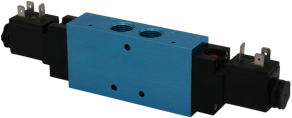
3/2-Way Single Solenoid
Three ports (pressure supply, actuator port, exhaust) with two switching positions control single-acting spring-return actuators commonly used on quarter-turn ball and butterfly valves. Available in normally closed or normally open configurations, these valves provide cost-effective control for simple open/close process isolation applications.
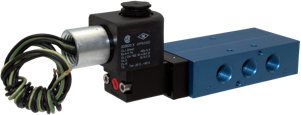
5/2-Way Single Solenoid
Five ports (pressure supply, two actuator ports, two exhaust ports) with two switching positions control double-acting actuators providing powered motion in both directions. Single solenoid with spring return ensures predictable fail-safe positioning—the valve automatically returns to its mechanical rest position upon loss of electrical power, enabling implementation of fail-closed or fail-open safety strategies as process hazard analysis dictates.
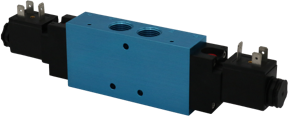
5/3-Way Double Solenoid
Five ports with three switching positions (two powered positions plus a center position) enable advanced control strategies. Open center configurations exhaust both actuator ports in the center position, allowing external forces to move actuators freely—useful for process applications requiring manual operation capability or situations where process pressure should not act against closed valves. Closed center and pressure center variants provide different operational characteristics for specialized applications.
The balanced spool construction allows ports to be plugged for converting 5/2-way valves to 3/2-way function or restricted for implementing inexpensive speed control—providing configuration flexibility that systems integrators and OEM equipment manufacturers value when adapting standard products to specific application requirements.
Air Supply Quality: Foundation for Reliable Valve Performance
Pneumatic control valves operate reliably only when supplied with properly prepared compressed air meeting cleanliness, pressure, and moisture specifications. The D-Series specification requires filtered air as the flow media—eliminating particulate contamination that causes premature seal wear, spool binding, and orifice clogging. Process facility compressed air systems should incorporate comprehensive air treatment including:
- Filtration - Remove particles down to 5 microns preventing solid contamination from reaching pneumatic components. Automatic drain separators eliminate liquid water and oil carryover from compressor discharge. For critical applications, additional coalescent filtration removes submicron aerosols and oil vapor.
- Pressure Regulation - Maintain consistent supply pressure regardless of demand fluctuations throughout the distribution system. Pressure regulators sized for system flow requirements prevent pressure droop during high-demand periods while protecting downstream components from overpressure during low-demand conditions.
- Drying - Remove moisture vapor preventing condensation that causes corrosion, ice formation in outdoor installations, and lubricant washout. Refrigerated dryers provide pressure dew points of 35-40°F adequate for most process applications, while desiccant dryers achieve pressure dew points of -40°F or lower for critical applications or extreme climate installations.
- Maintenance managers implementing preventive maintenance programs should establish regular inspection and service intervals for compressed air treatment equipment. Filter element replacement at recommended intervals prevents contamination accumulation, pressure regulator calibration maintains stable operating conditions, and system leak detection minimizes wasted compressed air while ensuring adequate pressure at pneumatic components.
Response Time Optimization for Process Control
Valve actuation speed directly impacts process control quality, batch cycle times, and emergency response effectiveness. Response time from electrical signal to complete valve positioning depends on multiple factors: valve design and spool mass, air supply pressure and flow capacity, actuator size and torque requirements, pneumatic tubing diameter and length (when not direct-mounted), and downstream circuit resistance.
The D-Series solenoid pilot design delivers rapid response by using full air line pressure to shift the valve spool—higher supply pressure produces faster switching. The 1.8 Cv flow capacity (1800 Nl/min) on D20 Series variants provides adequate flow to actuate typical quarter-turn actuators in 0.5 to 2.0 seconds depending on actuator size and torque requirements. For applications requiring slower, controlled actuation to prevent water hammer, pressure surge, or mechanical shock, flow restriction or external speed control valves can be added.
Process engineers concerned about control loop response should consider complete circuit dynamics including sensor response time, control system scan and processing time, valve and actuator response time, and process lag time. While valve response represents only one component, specifying valves with adequate response characteristics ensures pneumatic circuits don't become the limiting factor in overall control system performance.
Fail-Safe Design for Process Safety Applications
Process hazard analysis and layers of protection analysis (LOPA) identify scenarios where automated protective actions must occur to prevent or mitigate hazardous events. Safety instrumented functions implementing these protective actions frequently utilize automated valves as final elements—closing feed valves to stop hazardous reactions, opening relief paths to prevent overpressure, isolating sections to contain releases, or actuating emergency venting systems.
D-Series single solenoid valves with spring return provide mechanically defined rest positions that valves automatically assume upon loss of electrical power or pilot air supply. This predictable de-energize-to-trip behavior enables safety circuit designs where specific valve states during emergency conditions can be reliably assured—critical for meeting ISA-84/IEC 61511 safety integrity requirements.
Proper safety instrumented system design requires comprehensive consideration of sensor reliability, logic solver design and programming, valve and actuator reliability and response time, proof testing intervals and procedures, and common cause failure prevention. While D-Series valves represent just one element within complete safety functions, their proven reliability and predictable failure modes support incorporation into safety systems requiring SIL 1 or SIL 2 integrity when properly designed with adequate redundancy, diagnostics, and testing protocols.
Custom Engineering Solutions for Specialized Process Requirements
While standardized catalog products address the majority of process industry applications effectively, complex process installations frequently encounter specialized requirements beyond standard specifications. Non-standard port configurations, extreme temperature applications, special materials for chemical compatibility, unusual voltage requirements for international installations, integrated manifold designs for OEM process equipment, and unique mounting provisions may require custom engineering.
The Automatic Valve engineering and product development process delivers tailored solutions rapidly—sometimes as quickly as two weeks from initial request to functional prototype for straightforward customizations. This capability proves particularly valuable for process equipment OEMs designing proprietary process machinery, engineering firms developing custom process systems, and project engineers implementing capital installations where standard products don't precisely match specifications.
Access to experienced fluid power engineers during design development prevents costly late-stage redesigns, accelerates time-to-market for OEM equipment manufacturers, and optimizes system performance by tailoring components to specific application requirements rather than forcing applications to compromise around catalog limitations.
-
Quality Consistency and Documentation Support
Process industry quality management systems require comprehensive supplier documentation including material certifications, certificates of conformance, test reports, calibration records, and traceability documentation. Pharmaceutical facilities qualifying suppliers for validated systems, chemical plants implementing quality management programs, food processors maintaining HACCP programs, and other regulated operations demand supplier documentation supporting their compliance requirements.
Automatic Valve maintains documentation systems enabling rapid retrieval of manufacturing records, material certifications, test data, and quality documentation for delivered products. Quality managers preparing for regulatory audits or customer quality assessments can request documentation demonstrating supplier quality compliance—simplifying audit preparation and demonstrating supply chain quality control to regulatory inspectors and customer auditors.
-
Technical Selection Guide: Specifying D-Series Valves for Process Applications
Successful valve specification requires systematically matching valve characteristics to application requirements across multiple dimensions: functional configuration, flow capacity, electrical voltage, environmental protection, hazardous area certification, and mounting provisions. A structured selection approach ensures optimal performance while avoiding over-specification that increases costs unnecessarily.
-
Application Requirements Assessment
Begin with comprehensive understanding of the pneumatic actuator being controlled. Determine actuator type (spring-return single-acting or double-acting), torque requirements and sizing, actuation speed requirements, fail-safe position requirements (fail-open, fail-closed, or fail-in-place), mounting interface specifications (NAMUR 1 or NAMUR 2), and environmental exposure conditions. These parameters establish baseline valve requirements.
Understand the process control strategy including normal operating mode (valve positioning frequency and duration), emergency shutdown requirements and response time, manual operation requirements for commissioning and maintenance, diagnostic and position feedback requirements, and integration with distributed control systems or safety systems. This context ensures valve selection aligns with both normal operations and abnormal condition responses.
-
Electrical System Integration Considerations
Match valve voltage and electrical characteristics to available control system outputs. Modern distributed control systems and safety systems typically provide 24V DC outputs making this the most common selection for new installations. Legacy process facilities with 120V AC or 240V AC control infrastructure or international projects requiring different voltage standards should specify accordingly.
For hazardous area installations, verify that electrical certification (intrinsically safe, explosion-proof, or general purpose) matches zone classification and required equipment protection level. Intrinsically safe installations require certified intrinsically safe barriers or isolators between control systems and field devices—ensure control system design incorporates appropriate interface equipment. Verify available output current capacity against valve power consumption specifications ensuring adequate driver capability, particularly when multiple valves connect to single output modules.
-
Environmental Protection and Materials Compatibility
Assess environmental exposure conditions including operating temperature ranges (standard -20°F to 123°F or low-temperature -40°F to 123°F variants), humidity and moisture exposure requiring weather-proof enclosures, chemical vapor exposure requiring corrosion-resistant materials, dust or particulate exposure requiring sealed enclosures, and washdown requirements in food processing or pharmaceutical applications.
Standard D-Series construction uses aluminum bodies with Buna-N seals suitable for filtered compressed air—the typical actuator control media. Verify media compatibility when unusual conditions exist including extreme temperatures outside standard ranges, chemical exposure requiring alternate seal materials, or contaminated air supply exceeding filtration recommendations. For specialized requirements, consult with Automatic Valve application engineers regarding material selection and custom configurations.
-
Flow Capacity and Actuator Performance Matching
While actuator manufacturers specify required air flow for achieving desired actuation speeds, verify that selected valve flow capacity provides adequate margin for reliable operation. The D20 Series standard 1/4" port configuration delivers 1.8 Cv (1800 Nl/min) flow capacity suitable for typical NAMUR-mounted quarter-turn actuators on process valves from 1/2" through 6" depending on actuator selection and required stroke time.
Larger actuators on bigger process valves, applications requiring very rapid actuation, or installations with pressure limitations may require higher flow capacity or special consideration of supply pressure optimization. Undersized pneumatic control valves cause slow actuator response, incomplete actuator travel under low pressure conditions, and potential process control problems. Automatic Valve application engineers can perform flow calculations confirming adequate valve capacity for specific actuator and performance requirements.
-
Mounting and Installation Provisions
Verify NAMUR interface compatibility between selected valve and actuator. Standard NAMUR 1 (1/4" interface) suits most small to medium actuators, while NAMUR 2 (1/2" interface) addresses larger actuators on bigger process valves. The D-Series includes transition plates and mounting hardware (5mm or 6mm fasteners depending on configuration) simplifying installation.
Consider access for maintenance when positioning actuators and valves. While NAMUR direct mounting creates compact installations, ensure adequate clearance for solenoid electrical connections, manual override operation, and eventual valve replacement. Process facility design that considers maintenance accessibility during initial layout prevents frustrating maintenance complications during urgent repair situations.
-
Total Cost of Ownership: The Business Case for D-Series Quality
Process industry procurement decisions increasingly emphasize total cost of ownership spanning acquisition cost, installation labor, energy consumption, maintenance requirements, reliability and uptime impact, and service life expectancy. When evaluated across typical process equipment service lives of ten to twenty years, component quality and supplier support capabilities dramatically impact lifetime costs.
Frequently Asked Questions: Process Industry Pneumatic Control Valves
-
Q: What is the NAMUR interface standard and why is it important for process valve automation?
Answer:
The NAMUR interface, formally specified in VDI/VDE 3845, establishes standardized mounting dimensions and port configurations enabling pneumatic control valves from any manufacturer to mount directly to pneumatic actuators from any manufacturer. This standardization provides universal interchangeability eliminating custom adapter requirements, reduces installation time by 60-70% compared to remote-mounted alternatives, enables rapid emergency valve replacement without actuator removal, and provides supply chain flexibility through multi-vendor compatibility. The standard defines precise mounting hole spacing (80mm for NAMUR 1 with 1/4" interface, 130mm for NAMUR 2 with 1/2" interface), air port location ensuring proper alignment between valve outlets and actuator inlets, sealing surface geometry using O-rings for leak-proof connections, and fastener specifications (typically M5 or M6 socket head cap screws). For process facilities with diverse actuator brands throughout operations, NAMUR standardization enables stocking of standardized replacement pneumatic control valves compatible with all actuators—dramatically simplifying spare parts inventory management while ensuring rapid emergency response capability during critical equipment failures.
-
Q: How do I determine whether a 3/2-way or 5/2-way D-Series valve configuration is appropriate for my process application?
Answer:
Configuration selection depends on the pneumatic actuator type controlling your process valve. Spring-return single-acting actuators—which use compressed air to move in one direction and mechanical spring force to return—require 3/2-way valves providing one actuator port plus exhaust. These actuators are common on smaller ball valves and butterfly valves where torque requirements enable spring return design. Double-acting actuators—which use compressed air for powered motion in both directions providing higher torque and bidirectional control—require 5/2-way valves providing two actuator ports with independent exhaust paths. These actuators dominate larger process valve applications where spring return designs become impractically large. Beyond actuator compatibility, consider fail-safe requirements: single solenoid with spring return provides defined rest position for fail-safe behavior (critical for safety applications), while double solenoid enables powered positioning in both directions with last-position hold during power loss. For process safety applications requiring specific fail-open or fail-closed behavior during emergency conditions per ISA-84/IEC 61511, select single solenoid spring-return valves and position the spring to achieve desired safe state. Automatic Valve application engineers can review your actuator specifications and control requirements to recommend optimal valve function configuration ensuring reliable operation and safety compliance.
-
Q: What hazardous area certifications does Automatic Valve offer for D-Series valves used in chemical plants, refineries, and other explosive atmosphere locations?
Answer:
D-Series valves are available with comprehensive hazardous area certifications addressing global regulatory requirements. ATEX certification (mandatory for European Union installations) covers equipment intended for potentially explosive atmospheres including gas atmospheres (Zones 0, 1, 2 based on explosive atmosphere frequency) and dust atmospheres (Zones 20, 21, 22). IECEx certification (voluntary international scheme based on IEC 60079 standards) provides globally recognized conformity certificates accepted throughout Asia, Middle East, North America, and other regions outside EU jurisdiction. CSA/FM certification addresses North American hazardous location requirements per National Electrical Code classifications (Class I Division 1 and 2 for gases and vapors, Class II for combustible dusts). Intrinsically safe variants for the most hazardous zones (Zone 0 gas, Zone 20 dust) operate at extremely low electrical power (1.6 watts) ensuring that even electrical faults cannot generate sufficient energy for ignition. When specifying D-Series valves for hazardous area installations, provide detailed area classification including zone/division designation, gas group or dust characteristics, temperature classification (T-rating), and required equipment protection level. Safety managers and project engineers should coordinate with process safety specialists to ensure complete hazardous area equipment selection aligns with facility area classification drawings and complies with jurisdiction-specific regulations. For multinational process companies deploying standardized equipment globally, IECEx certification simplifies procurement by enabling single specification valid across multiple countries and regulatory frameworks.
-
Q: How does the D-Series valve support process safety instrumented systems designed to ISA-84 and IEC 61511 requirements?
Answer:
Process safety instrumented systems (SIS) implement automated protective actions preventing or mitigating hazardous events when process conditions deviate beyond safe operating limits. ISA-84/IEC 61511 establishes comprehensive requirements for safety instrumented functions including sensor reliability, logic solver design and programming, final element reliability and response time, proof testing intervals and procedures, and complete safety lifecycle management. While D-Series pneumatic control valves themselves don't carry Safety Integrity Level (SIL) ratings, they function as critical components within safety instrumented systems by controlling emergency shutdown valves on process lines, pressure relief actuation valves, isolation valves for hazardous material containment, and other safety-critical final elements. The proven reliability (20-million cycle SAE testing), predictable failure modes (single solenoid spring-return valves transition to mechanically defined rest positions upon power loss), manual override capability for proof testing and maintenance, and comprehensive diagnostic capability when integrated with valve position sensors support incorporation into safety functions. Proper safety system design requires calculating probability of failure on demand (PFD) for complete safety functions considering all components, implementing redundancy appropriate to required risk reduction, establishing proof testing protocols validating continued functionality, and preventing common cause failures through diversity and separation. Process safety engineers should consult ISA-TR84.00.02 technical report providing detailed guidance on SIL verification calculations. Automatic Valve can provide reliability data supporting safety integrity calculations and connect customers to broader safety engineering expertise through parent company ROSS Controls' industry-leading safety system knowledge.
-
Q: What maintenance procedures are required for D-Series NAMUR valves to achieve maximum service life in process industry applications?
Answer:
D-Series valves require minimal maintenance when operated with properly filtered compressed air within specified parameters, making them ideal for continuous process operations where maintenance access windows are limited. Implement quarterly visual inspections checking for external air leakage (audible hissing or detected with leak detection solutions), physical damage to valve body, electrical connections, or mounting hardware, corrosion or environmental degradation requiring attention, and proper mounting security ensuring fasteners remain tight. Address observed abnormalities immediately—minor issues compound into failures when ignored. Annually conduct functional testing by manually overriding valves to confirm free spool movement without binding or hesitation, cycling valves electrically while monitoring for consistent rapid actuation without delays, verifying downstream actuators complete full travel in both directions, and confirming solenoid power consumption remains within specifications (increasing consumption may indicate coil degradation). Monitor compressed air supply quality including filter differential pressure (replace elements when specified maximum differential is reached), supply pressure consistency across operating cycles, moisture presence (excessive moisture indicates dryer malfunction), and air quality meeting cleanliness specifications (ISO 8573-1 Class 4 or better recommended). Poor air quality causes 70-80% of premature pneumatic component failures—maintaining proper air preparation protects D-Series valves and entire downstream pneumatic systems. For safety instrumented function applications, conduct proof testing at intervals determined by safety integrity calculations and facility safety management requirements—typically monthly to annually depending on required risk reduction and system design redundancy. Proof testing validates continued capability to respond correctly to demand conditions and provides empirical reliability data for updating safety system performance models. Document all maintenance activities, test results, and component replacements maintaining records supporting regulatory compliance, reliability analysis, and continuous improvement initiatives.
-
Q: How does Automatic Valve's Quick Ship Program benefit process facilities facing emergency valve failures during critical production periods?
Answer:
Process equipment failures create operational crises where every hour of downtime generates lost production revenue, threatens customer delivery commitments, idles workforce resources, and potentially impacts safety or environmental compliance. The Automatic Valve Quick Ship Program delivers next-day shipment on commonly specified D-Series configurations—dramatically faster than typical industry lead times of five days for expedited programs or two to four weeks for standard production items. This rapid availability transforms emergency response timelines: instead of scheduling multi-day process outages pending parts delivery, maintenance teams can plan single-shift repairs minimizing production impact. Real-time inventory visibility on the Automatic Valve website enables immediate verification of stock availability before ordering, eliminating uncertainty that forces emergency buyers toward alternative suppliers with unknown quality, questionable compatibility, and inadequate technical support. Quick Ship availability encompasses the most frequently specified D-Series configurations including 5/2-way and 3/2-way functions, 1/4" NAMUR 1 interface, 24V DC voltage, standard temperature range, and general automation (non-hazardous) variants. For configurations not stocked in Quick Ship inventory, standard lead times typically range from two to four weeks depending on complexity. Custom-engineered solutions requiring specialized features may require extended development timelines but can leverage rapid prototyping capabilities delivering functional samples in as little as two weeks for straightforward modifications. Plant managers evaluating supplier relationships increasingly recognize that supplier emergency responsiveness represents operational insurance protecting against catastrophic downtime costs that dwarf component acquisition prices—making supplier selection about risk management as much as price negotiation.
-
Q: What custom engineering capabilities does Automatic Valve offer for process applications with specialized requirements beyond standard catalog products?
Answer:
Process installations frequently encounter specialized requirements that standard catalog products don't precisely address. The Automatic Valve engineering and product development process delivers custom solutions for applications including non-standard electrical voltages for international installations, extreme temperature applications beyond standard -20°F to 123°F range, specialized seal materials for chemical compatibility with unusual process gases, higher flow capacity configurations for large actuators, integrated manifold designs for OEM process equipment manufacturers, special hazardous area certifications for specific international jurisdictions, and unique mounting provisions for space-constrained installations. Custom development timelines vary based on complexity—simple modifications like voltage changes or seal material substitutions may require only two to three weeks, while complex custom designs requiring validation testing may extend to eight to twelve weeks. The process begins with detailed consultation where application engineers review your requirements, assess feasibility, and propose solutions. For OEM equipment manufacturers developing proprietary process machinery sold globally, custom valve development enables performance optimization, competitive differentiation, and adaptation to diverse international standards and certifications. Systems integrators facing challenging installation constraints gain engineering partnership in developing solutions rather than compromising system design around catalog limitations. Project engineers managing capital installations with exacting specifications can work collaboratively with Automatic Valve engineers ensuring delivered components precisely match requirements. The customer-centric philosophy guiding Automatic Valve for eight decades means that engineering discussions focus genuinely on solving your application challenges rather than forcing applications into existing products—we succeed when your applications succeed, creating aligned incentives for collaborative problem-solving.
-
Q: How does Automatic Valve support quality assurance and supplier qualification requirements for process facilities in regulated industries like pharmaceuticals and food processing?
Answer:
Regulated process industries including pharmaceutical manufacturing (FDA 21 CFR Part 211), food and beverage processing (FDA FSMA and USDA requirements), and chemical facilities (EPA regulations) maintain rigorous supplier qualification programs ensuring that purchased components meet quality, traceability, and documentation standards. Automatic Valve supports these requirements through multiple mechanisms. ISO 9001:2015 quality management system certification demonstrates implementation of comprehensive quality processes spanning design control, supplier qualification, manufacturing process validation, inspection and testing procedures, corrective action systems, and continuous improvement initiatives. Many regulated companies accept ISO 9001 certification as sufficient evidence of quality system adequacy, simplifying or eliminating requirements for independent supplier audits. Comprehensive documentation support includes certificates of conformance for production shipments, material certifications and test reports for components and materials, traceability records linking finished products to raw material lots, validation support documentation for equipment qualification protocols (IQ/OQ/PQ), and audit preparation assistance. Quality managers can request advance copies of documentation supporting supplier qualification packages, schedule facility audits to observe manufacturing and quality control processes firsthand, and establish quality agreements defining specific documentation and performance requirements. The quality commitment extends beyond certifications to operational reality—consistent manufacturing processes ensure that prototype quantities perform identically to production quantities, eliminating unpleasant surprises when scaling from development to full production. For pharmaceutical project engineers conducting equipment validation, for food processing quality managers maintaining HACCP programs, and for chemical plant quality professionals implementing ISO management systems, Automatic Valve's quality infrastructure and documentation support simplifies supplier qualification while providing confidence in consistent component quality throughout long-term supply relationships.
-
Q: What role does compressed air quality play in D-Series valve performance and longevity, and what air preparation is recommended?
Answer:
Compressed air quality represents the single most influential factor determining pneumatic component service life and reliability. D-Series valves specify filtered air as flow media—contaminated air containing particulate matter, liquid water, oil carryover, or rust scale causes accelerated seal wear, spool binding and sticking, orifice erosion or clogging, corrosion of internal components, and premature component failure. Industry research consistently demonstrates that 70-80% of premature pneumatic component failures trace to inadequate air preparation rather than component defects. Recommended compressed air quality meets or exceeds ISO 8573-1 Class 4 specifications for particulate contamination (maximum particle size 5 microns), pressure dew point classification preventing condensation at operating temperatures, and oil content minimization. Achieve this quality through comprehensive air treatment systems including inlet filtration removing particles down to 5 microns with automatic moisture drainage, pressure regulation maintaining consistent supply pressure (35-150 psig for D-Series internal pilot operation), refrigerated or desiccant air drying preventing moisture condensation, and optional final-point-of-use filtration for critical applications. Process maintenance managers should implement preventive maintenance schedules for air treatment equipment including quarterly filter element inspection and replacement based on differential pressure, annual pressure regulator calibration verification, regular automatic drain inspection ensuring proper moisture removal, and system-wide leak detection programs minimizing wasted compressed air. The investment in proper air preparation provides extraordinary return—extending pneumatic component service lives by factors of three to five times compared to inadequately prepared air while simultaneously reducing energy costs through system leak elimination and pressure optimization. For new process facility design or major renovations, process engineers should engage compressed air system specialists to properly size compressors, design distribution networks, and specify adequate air treatment equipment—proper system design at installation prevents persistent air quality problems that plague facilities for decades when inadequately addressed initially.